Concrete Disposal Dumpster Rental in Schenectady, NY
Breaking up a concrete patio, sidewalk, driveway, steps, slab, or other structure can create a dense amount of demolition debris very quickly. A concrete disposal dumpster can provide a centralized collection point when the material and weight requirements are suitable for the service.
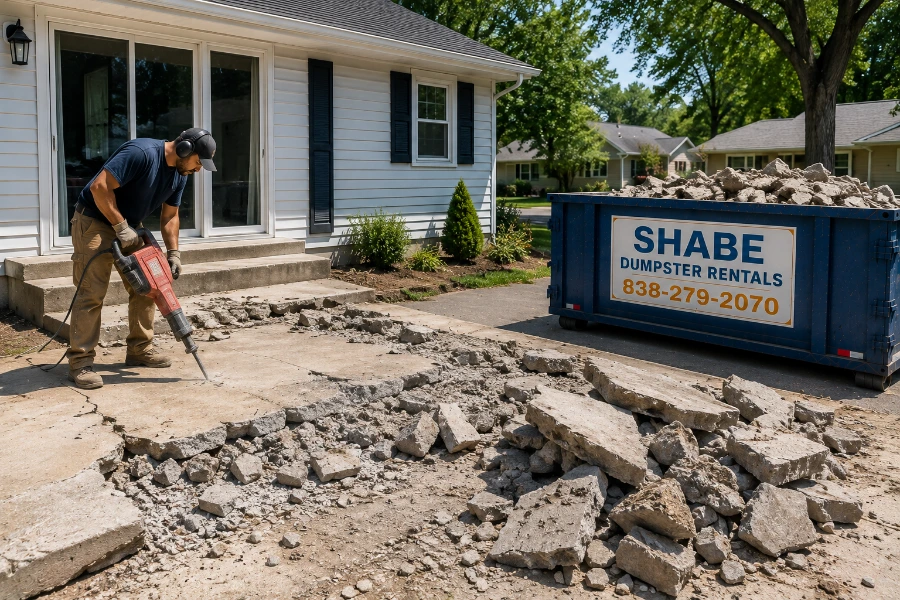
Plan for Concrete Debris Before You Start the Demolition
Concrete is very different from ordinary household or remodeling debris. A relatively small amount can become extremely heavy once a patio, walkway, driveway section, foundation component, or slab is broken into pieces.
That makes disposal planning important before demolition begins. The container needs to be suitable for the material, the expected load should be kept within applicable weight limits, and the placement area needs to provide practical access for loading and pickup.
For projects involving concrete removal, the goal is not simply to find empty container space. It is to match the project, material, weight, and disposal arrangement correctly from the beginning.
Concrete is extremely dense. Do not assume that a dumpster can be filled to the top with concrete. Weight restrictions can become the controlling factor long before visual capacity is reached.
When Is Concrete Disposal Dumpster Rental Useful?
Concrete debris can come from residential demolition, remodeling, repairs, landscaping, and property improvements.
Patio Removal
Break up and remove an old concrete patio before installing a new outdoor surface or redesigning the yard.
Sidewalk Removal
Clear damaged or outdated concrete walkways during property improvements or accessibility upgrades.
Driveway Demolition
Remove sections or an entire concrete driveway when repairing, replacing, or redesigning the property entrance.
Concrete Steps
Demolish outdated or damaged concrete steps as part of exterior repairs or replacement work.
Slab Removal
Remove concrete slabs associated with garages, additions, outbuildings, patios, or other property improvements.
Masonry & Hardscape Cleanup
Concrete-related demolition may also happen during broader hardscape, landscaping, or property renovation projects.
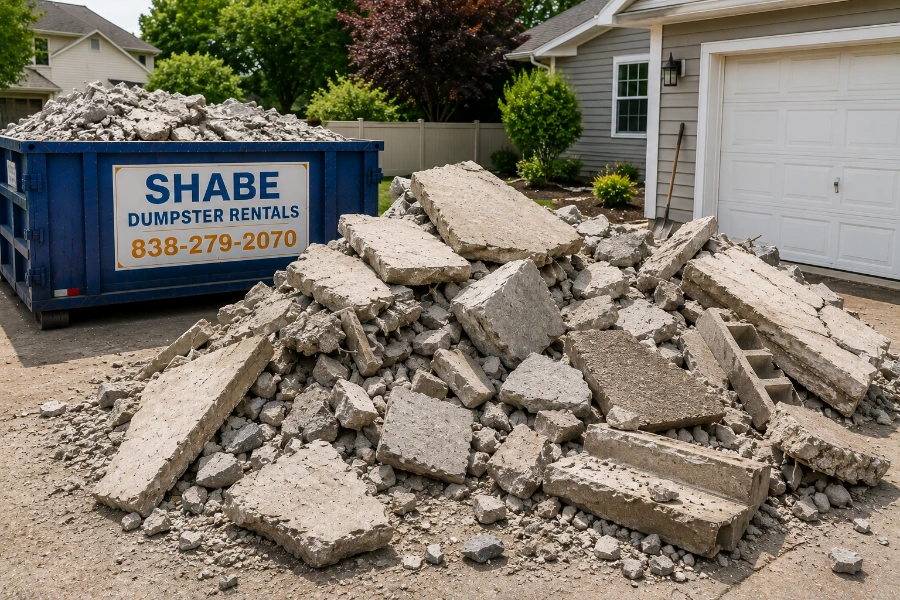
What Types of Concrete Can Come From a Demolition Project?
Patio and Walkway Concrete
Broken slabs from patios, paths, walkways, and other residential hardscape areas can create dense chunks of concrete.
Driveway Sections
Driveway replacement can generate large amounts of concrete that should be planned around both volume and weight.
Foundation or Slab Pieces
Concrete from slabs, pads, and selected structural demolition work may require specialized disposal planning.
Concrete Steps and Edging
Stairs, curbs, edging, and other small concrete structures can add substantial weight even when the overall debris volume looks limited.
Broken Masonry
Some demolition projects may also include blocks or masonry components. These should be identified separately before loading.
For broader heavy-material planning, see our Dirt Disposal page.
Why Concrete Dumpster Projects Require Extra Attention
Extremely Dense
Concrete can reach weight limits quickly, so a partially filled container can already be a heavy load.
Irregular Pieces
Broken slabs and chunks are difficult to stack efficiently and may leave unused spaces inside the container.
Equipment Intensive
Concrete demolition may require saw cutting, breakers, hauling equipment, or other tools depending on the project.
Access Sensitive
Delivery and pickup conditions matter more when the container will hold a dense load and heavy equipment is working nearby.
Discuss the concrete specifically. A standard household dumpster plan should not automatically be used for a concrete-heavy project.
How to Prepare for Concrete Disposal
Measure the Project
Estimate the slab, patio, walkway, driveway, or other concrete area being removed before deciding how to handle the debris.
Identify the Material
Determine whether the project involves ordinary concrete, masonry, reinforced sections, mixed debris, or other materials.
Check Access
Make sure the delivery area and debris path can accommodate the container, demolition work, and equipment.
Confirm Weight Requirements
Discuss the expected concrete quantity before loading so the appropriate disposal arrangement can be selected.
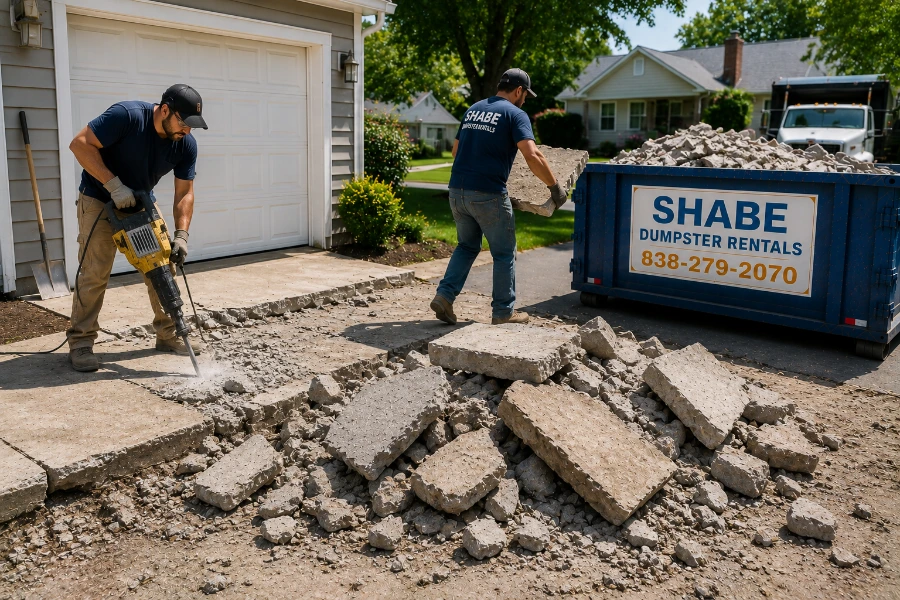
How to Manage Concrete During Removal
Clear the Work Area
Remove furniture, vehicles, planters, outdoor belongings, and other items from the demolition zone.
Break the Concrete Into Manageable Pieces
Where appropriate and safe, concrete is broken into pieces that can be handled and moved without creating unnecessary hazards.
Separate Other Materials
Keep soil, wood, metal, trash, or unrelated debris separate when the disposal arrangement calls for concrete-only material.
Load With Weight in Mind
Place concrete carefully and do not treat the visual fill level as the only measure of whether the container is properly loaded.
Maintain Safe Access
Keep equipment paths, driveways, walkways, and loading areas clear while the demolition is underway.
Finish the Surface Cleanup
Once the concrete has been removed, sweep and inspect the area for remaining chunks, dust, reinforcement, or other project debris.
Can Concrete Be Mixed With Other Project Debris?
The answer depends on the specific dumpster service and disposal arrangement. Concrete is heavy enough that adding unrelated materials can change how the load must be handled.
What Dumpster Size Is Right for Concrete Disposal?
Concrete projects should be planned around the material’s weight, not simply the amount of empty space inside the container.
Small Patio
A compact concrete patio can still create a surprisingly heavy debris load once fully demolished.
Walkway or Steps
Smaller concrete structures can generate less volume but may still be dense enough to require careful weight planning.
Large Slab
Large slabs, driveways, or substantial hardscape areas can create loads that exceed ordinary dumpster assumptions.
Concrete + Other Debris
When concrete is combined with soil, wood, drywall, or other materials, the full debris profile must be considered.
More space does not necessarily mean more concrete. Weight limits can make a smaller portion of a container the practical maximum for dense concrete debris.
Review available containers on our Dumpster Sizes page.
Explore Related Heavy-Debris and Dumpster Rental Information
Concrete removal often overlaps with construction, landscaping, demolition, patio work, and other heavy-material projects.
Helpful Pages for Concrete Projects
Concrete Disposal Dumpster Rental in Schenectady and Nearby Communities
Concrete removal projects can include patios, sidewalks, driveways, slabs, steps, and other residential hardscape throughout Schenectady and nearby communities.
Customers in Schenectady, Rotterdam, Niskayuna, Scotia, and Glenville may have different access considerations depending on the property, driveway, work area, demolition equipment, and amount of concrete being removed.
For broader local coverage, visit our Service Areas page.
Handle Concrete and Construction Debris Responsibly
Concrete demolition can generate a significant amount of construction and demolition material. Separating suitable materials and planning disposal around the actual debris stream can help keep the project more organized and reduce unnecessary waste.
EPA: Sustainable Management of Construction and Demolition Materials
Concrete Disposal Dumpster FAQs
What is a concrete disposal dumpster?
It is a dumpster used for approved concrete and related demolition debris from projects such as patio, sidewalk, driveway, slab, or step removal.
Can concrete go in a dumpster?
Concrete may be accepted for certain dumpster services, but it is extremely heavy and often has specific weight and material requirements. Confirm before loading.
Can I put a concrete patio in a dumpster?
A demolished concrete patio may be suitable for a concrete disposal arrangement when accepted by the service. The size and thickness of the patio should be considered before selecting the container.
Can driveway concrete go in a dumpster?
Driveway concrete may be accepted depending on the service, but a driveway can produce a very large and heavy debris load. Confirm the project scope before loading.
Can I mix concrete with dirt?
Mixing dense materials can significantly increase the total load. Confirm whether concrete and dirt can be combined before beginning the project.
Can concrete be mixed with wood and drywall?
It depends on the dumpster service and disposal arrangement. Concrete should be disclosed specifically because its weight can change the requirements of a mixed load.
Why are concrete dumpsters different from regular dumpsters?
Concrete is much denser than ordinary household debris, so weight can become the limiting factor before the container is visually full.
What size dumpster do I need for concrete?
The answer depends on the concrete area, thickness, demolition method, and whether other dense materials are included. Container capacity should be evaluated by both volume and weight.
How much concrete can I put in a dumpster?
The allowable amount depends on the specific container and applicable weight limits. Do not estimate concrete capacity by visual fill level alone.
Can reinforced concrete go in a dumpster?
Reinforced concrete may require additional consideration because rebar and other reinforcement can affect handling and disposal. Describe the material before scheduling the dumpster.
How much does concrete disposal dumpster rental cost?
There is no universal price. Dumpster size, rental period, location, disposal requirements, and the amount and type of concrete or mixed debris can all affect the final cost.
Can a concrete dumpster be placed in my driveway?
Placement may be possible when access and surface conditions are suitable. Concrete loads are heavy, so placement and delivery conditions should be considered carefully.
Do I need a permit for a concrete disposal dumpster?
Requirements can depend on where the dumpster is placed. Private property and public right-of-way placement can have different requirements.
Can I use a concrete dumpster for a construction project?
A construction project may use a concrete-focused disposal arrangement when appropriate, but the complete list of debris should be reviewed before choosing the container.
Need a Dumpster for Concrete Removal in Schenectady?
Tell us what concrete you’re removing, approximately how much there is, whether other heavy materials are included, and where the project is located so the appropriate dumpster option can be discussed.
Call Now