
Yard Waste Dumpster Rental in Schenectady, NY
Yard cleanup can create more material than a regular household waste service is designed to handle. Branches, brush, leaves, grass, shrubs, roots, and other outdoor debris can accumulate quickly during seasonal cleanup, landscaping, storm cleanup, or property maintenance. A yard waste dumpster provides a centralized place for approved debris while the work gets done.
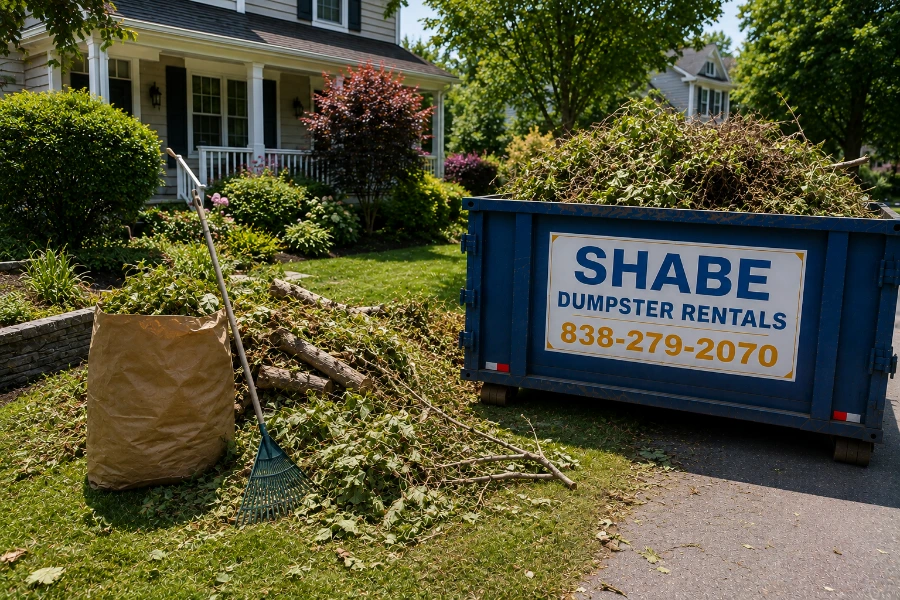
Keep Yard Debris Contained During Seasonal Cleanup
Yard waste can build up fast after pruning, shrub removal, storm cleanup, landscaping, or a major spring or fall property cleanup. Branches and brush can create large piles even when the actual material is relatively lightweight.
A dumpster creates one designated collection point for approved yard debris while you work across the property. This can make a larger cleanup easier to organize and reduce the amount of material scattered around the yard.
Not all outdoor debris is treated the same way, however. Branches, leaves, soil, sod, roots, concrete, treated lumber, and household trash can have different disposal requirements. The material list should be clear before the dumpster is loaded.
Yard waste and landscaping debris are not always interchangeable. Soil, rocks, concrete, treated wood, and household trash may require different disposal arrangements from ordinary branches and brush.
When Is a Yard Waste Dumpster Useful?
Outdoor debris can come from routine maintenance as well as larger property improvement projects.
Spring Yard Cleanup
Remove branches, brush, fallen debris, dead vegetation, and other accumulated outdoor material after winter.
Fall Yard Cleanup
Clear leaves, branches, shrubs, garden debris, and other seasonal material before winter arrives.
Storm Cleanup
Gather broken branches, limbs, brush, and other storm-related outdoor debris after a property cleanup.
Shrub Removal
Remove unwanted shrubs, branches, roots, and related vegetation during a landscape renovation.
Garden Cleanup
Clear old plants, stems, roots, garden debris, and seasonal material before rebuilding planting areas.
Property-Wide Cleanup
Combine outdoor debris removal with broader landscaping or residential cleanup when the material is compatible.
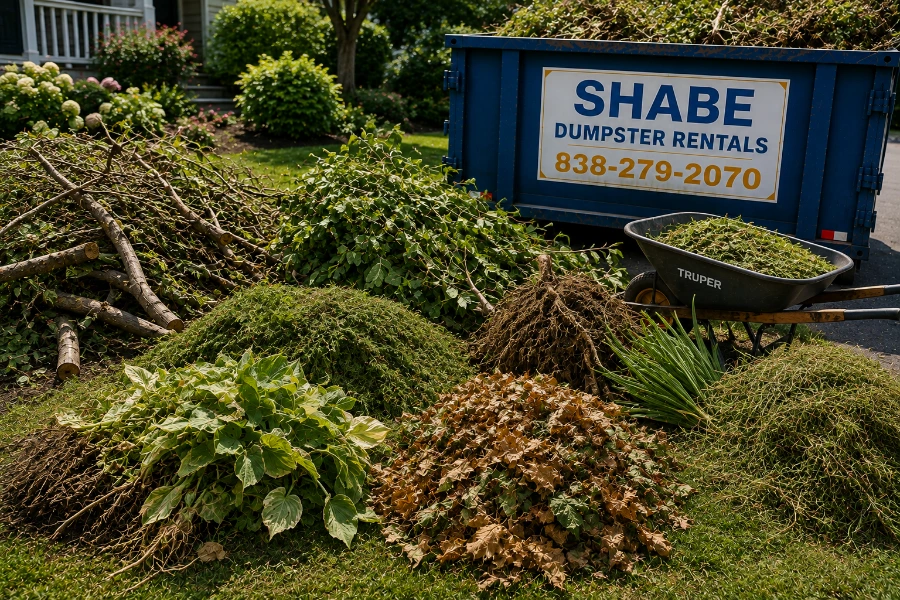
What Can a Yard Waste Dumpster Help Remove?
Branches
Pruning, shrub removal, and storm cleanup can produce branches of different sizes that quickly fill outdoor areas.
Brush
Brush piles from clearing overgrown sections of the property can be bulky and difficult to manage without a centralized disposal point.
Leaves and Grass
Seasonal cleanup can create large amounts of leaves and grass, depending on the property’s size and the type of service available.
Shrubs and Plants
Removing old shrubs, garden plants, vines, and other unwanted vegetation can produce substantial green waste.
Roots
Root systems and woody material may need separate consideration, especially when they contain large root balls or attached soil.
For a larger outdoor project involving soil, hardscape, and vegetation, see our Landscaping Dumpster page.
Different Yard Waste Materials Behave Differently
Branches
Long branches can occupy considerable space and may need to be cut or bundled appropriately for efficient loading.
Brush
Brush is lightweight but bulky, making container volume an important consideration.
Leaves
Leaves can take up large amounts of space when loose and compact significantly once loaded.
Roots
Root balls can contain soil and become much heavier than ordinary branches or brush.
Know what is attached to the yard debris. A root ball with soil, a branch with a large trunk section, or vegetation mixed with rocks can create a very different load from clean brush alone.
How to Prepare for a Yard Waste Dumpster
Walk the Property
Identify branches, brush piles, shrubs, garden debris, storm damage, and other outdoor material that needs removal.
Separate Materials
Keep soil, concrete, treated wood, household trash, and other non-yard materials separate unless they are specifically accepted.
Prepare Large Debris
Cut or manage branches and bulky vegetation in a safe manner so the material can be loaded efficiently.
Choose a Practical Location
Plan a spot with suitable access so yard waste can move from the cleanup area to the dumpster without crossing unnecessary parts of the property.
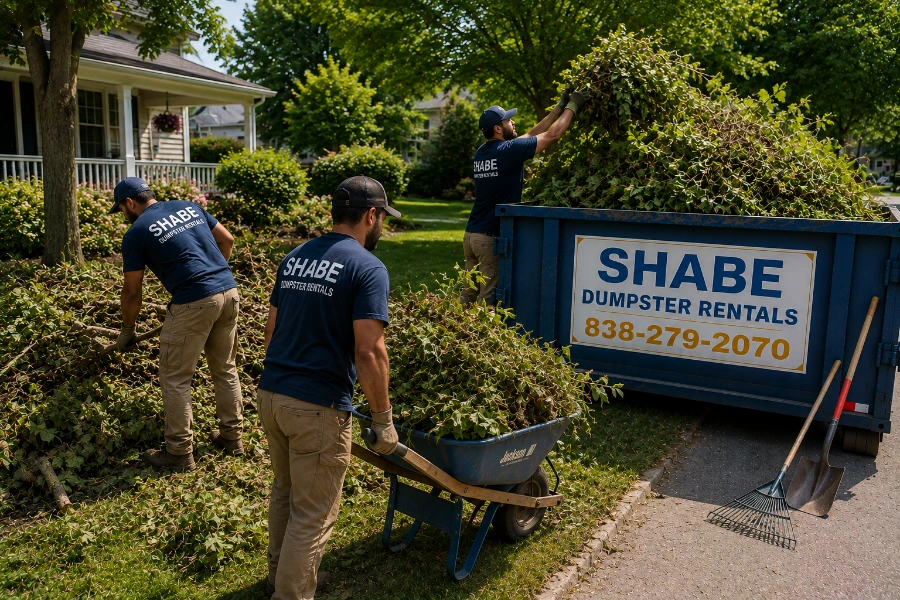
How to Organize a Large Yard Waste Cleanup
Start With the Largest Debris
Remove large branches, shrubs, and bulky vegetation first to open up the yard and create room for smaller material.
Work in Defined Zones
Divide the property into sections so each part of the yard is cleared systematically.
Separate Heavy Material
Keep soil, concrete, stones, gravel, and other dense materials apart from ordinary yard waste when required.
Load Efficiently
Position bulky branches and brush so the available container space is used effectively without creating unsafe protrusions.
Keep Access Clear
Maintain clear paths for workers, equipment, vehicles, and dumpster access throughout the cleanup.
Finish With Fine Debris
Complete the cleanup with smaller vegetation, leaves, loose debris, and remaining approved material after the major branches and shrubs are gone.
Can Yard Waste Be Mixed With Other Property Debris?
Sometimes a cleanup involves more than vegetation. The safest approach is to identify each major material before loading so the disposal arrangement matches the actual project.
What Dumpster Size Is Right for Yard Waste?
Yard waste can be bulky without being especially heavy, but the answer changes when soil, roots, concrete, or other dense material is added.
Small Yard Cleanup
A limited amount of pruning, brush, or seasonal cleanup can generate a relatively modest volume.
Large Brush Cleanup
Extensive shrub removal, storm debris, and branch piles can use substantial container space.
Property-Wide Cleanup
Clearing multiple areas of a large property can produce a much larger combined yard waste load.
Yard + Landscaping
Adding soil, sod, hardscape, tree work, or structural debris changes the overall container planning.
Container size should match the material mix. A dumpster for branches and brush may have very different practical requirements from one also carrying soil, gravel, or concrete.
Review available containers on our Dumpster Sizes page.
Explore Related Yard Cleanup and Dumpster Rental Information
Yard waste projects can overlap with landscaping, tree removal, spring cleaning, dirt disposal, deck removal, and other outdoor property work.
Yard Waste Dumpster Rental in Schenectady and Nearby Communities
Yard waste cleanup projects can include seasonal maintenance, landscaping, storm cleanup, shrub removal, brush clearing, and property-wide outdoor cleanup throughout Schenectady and nearby communities.
Customers in Schenectady, Rotterdam, Niskayuna, Scotia, and Glenville may have different access considerations depending on driveway placement, yard layout, fencing, cleanup area, and the type and amount of debris being removed.
For broader local coverage, visit our Service Areas page.
Reuse or Compost Yard Materials Where Practical
Yard cleanup can produce organic material that may have alternatives to ordinary disposal. Leaves, branches, grass, and other landscaping material may be suitable for reuse, mulching, composting, or other appropriate management depending on the material and local options.
Yard Waste Dumpster FAQs
What is a yard waste dumpster?
It is a dumpster used to collect approved outdoor debris such as branches, brush, leaves, shrubs, roots, and other yard cleanup material.
What can I put in a yard waste dumpster?
Accepted materials depend on the service. Common yard debris can include branches, brush, leaves, grass, shrubs, and roots when specifically approved.
Can branches go in a yard waste dumpster?
Branches may be accepted depending on the service. Large limbs and woody material should be identified before loading because size can affect handling and container capacity.
Can leaves go in a dumpster?
Leaves may be accepted depending on the dumpster arrangement. Because loose leaves are bulky, they can occupy considerable space even when they are relatively lightweight.
Can grass clippings go in a yard waste dumpster?
Grass may be accepted depending on the service and local disposal requirements. Confirm before loading large quantities.
Can I put roots and shrubs in the dumpster?
Roots and shrubs may be accepted depending on the service. Root balls containing soil can become much heavier than ordinary branches and brush.
Can I put dirt in a yard waste dumpster?
Dirt may require a different disposal arrangement because of its density and weight. Confirm before mixing soil with ordinary yard debris.
Can I put concrete in a yard waste dumpster?
Concrete is a dense material with separate weight and disposal considerations. It should be identified before being combined with yard waste.
What dumpster size do I need for yard waste?
It depends on the amount of branches, brush, leaves, shrubs, roots, and other material being removed. Review the Dumpster Sizes guide while accounting for the specific material mix.
Can I combine yard waste with landscaping debris?
Potentially, when the materials are compatible and accepted. Landscaping debris can include soil, gravel, concrete, and other materials that may need separate consideration.
Can yard waste and tree removal debris go in the same dumpster?
It may be possible when the materials are accepted. Branches, trunks, roots, and other tree debris should be included when estimating the complete load.
How long should I rent a yard waste dumpster?
The appropriate rental period depends on the property size, amount of vegetation, cleanup schedule, weather, and whether landscaping work is happening at the same time.
How much does a yard waste dumpster cost?
There is no universal price. Dumpster size, rental period, location, disposal requirements, and the amount and type of yard debris can all affect the final cost.
Can the dumpster be placed close to the yard cleanup area?
Placement depends on delivery access, surface conditions, driveway location, and the safest practical path between the work area and the container.
Do I need a permit for a yard waste dumpster?
Requirements can depend on where the dumpster is placed. Private property and public right-of-way placement can have different requirements.
Need a Dumpster for Yard Waste in Schenectady?
Tell us what you’re removing, such as branches, brush, leaves, shrubs, roots, or mixed outdoor debris, approximately how much material you have, and where the property is located so the appropriate dumpster option can be discussed.
Call Now