
Demolition Dumpster Rental in Schenectady, NY
Demolition projects can generate a large and unpredictable mix of debris. Walls, flooring, cabinets, drywall, framing, fixtures, roofing, wood, and other materials may all need to leave the property before the next phase begins. A demolition dumpster gives the project a central place for approved debris while the structure or interior is being cleared.
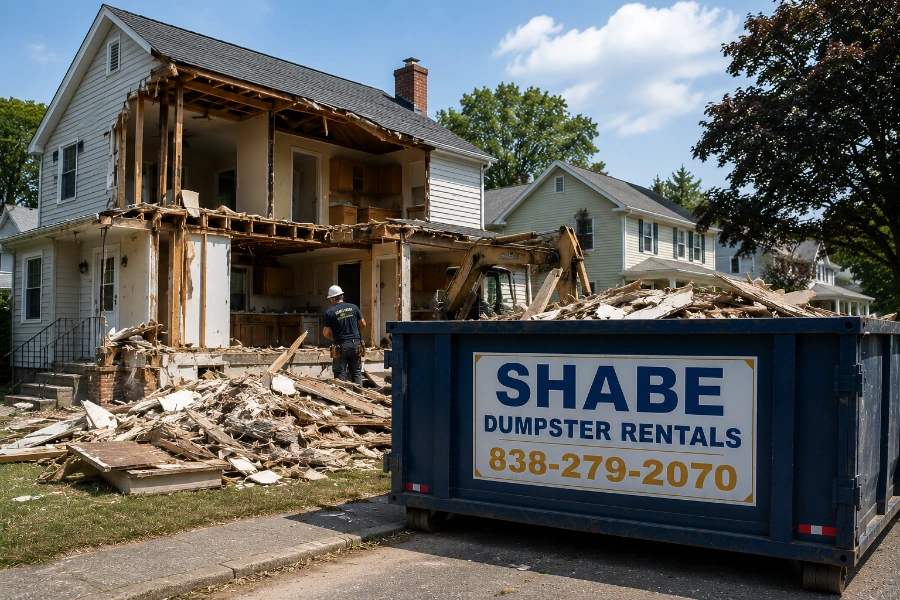
Give Demolition Debris a Central Place to Go
Demolition is different from ordinary remodeling because the project often starts with removing existing materials rather than simply replacing a finish. That can mean several rooms, structures, or exterior components are being dismantled at once.
A dumpster helps create a designated collection point for approved demolition debris. As materials come out of the property, they can be moved toward the container instead of accumulating in multiple piles around the site.
The right disposal arrangement depends on what is being demolished. A light interior tear-out has different requirements from a project involving concrete, masonry, roofing, heavy wood, or larger structural components.
Demolition material should be identified before loading. Concrete, dirt, hazardous materials, appliances, electronics, and other special materials may require different disposal routes from ordinary construction debris.
When Is a Demolition Dumpster Useful?
Residential demolition can mean removing part of an interior, taking down an outdoor structure, or clearing a larger building section before reconstruction.
Interior Tear-Out
Remove walls, flooring, cabinets, fixtures, drywall, trim, and other existing materials during an interior renovation.
Room Demolition
Clear an entire kitchen, bathroom, basement, garage, or other room before rebuilding the space.
Deck Demolition
Remove old decking, framing, stairs, railings, and related outdoor structural materials.
Shed Demolition
Clear an unwanted shed or small outdoor structure before improving or redesigning the property.
Partial Structure Removal
Demolish selected walls, additions, finishes, or other sections while preserving the rest of the property.
Pre-Construction Demolition
Clear existing materials before a larger construction or reconstruction project begins.
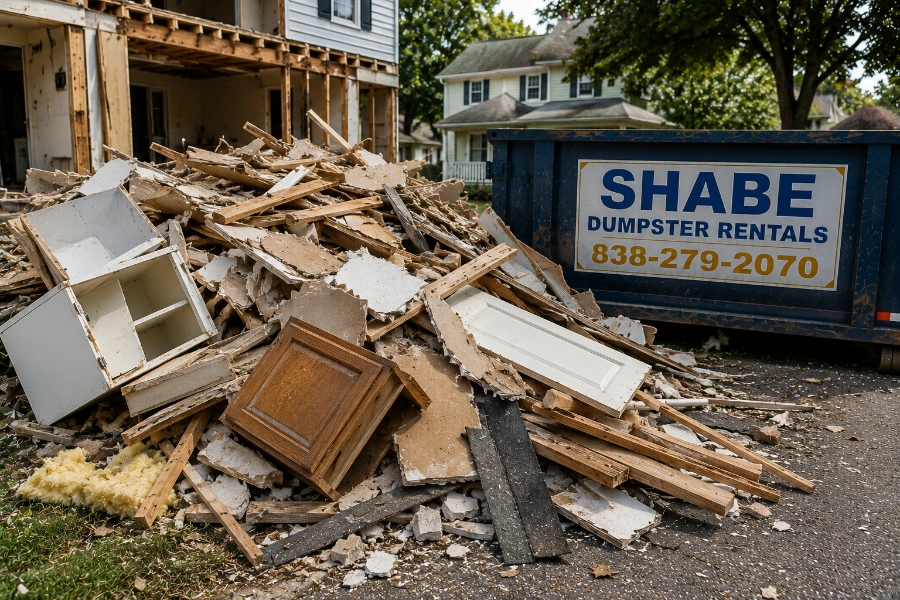
What Materials Can a Demolition Project Generate?
Wood and Framing
Wall framing, joists, trim, doors, cabinets, decking, and other wood components can make up a significant part of a demolition load.
Drywall
Removing interior walls and ceilings can create large amounts of broken drywall and related material.
Flooring
Carpet, hardwood, laminate, vinyl, tile, underlayment, and trim may all be removed during a demolition project.
Cabinets and Fixtures
Kitchens, bathrooms, and utility rooms can generate cabinetry, vanities, sinks, counters, fixtures, and other bulky materials.
Roofing and Exterior Material
Demolition can also include shingles, siding, gutters, exterior wood, or other building components.
For larger project planning, visit our Construction Dumpster Rental page.
Demolition Debris Can Change Quickly From One Project to Another
Bulky
Cabinets, framing, doors, drywall, and fixtures can consume large amounts of container space.
Heavy
Concrete, tile, masonry, stone, and other dense materials can create weight limitations much faster than light debris.
Mixed
Demolition often combines wood, metal, drywall, flooring, fixtures, and other materials in one project.
Irregular
Broken structural pieces and dismantled fixtures may not stack as efficiently as ordinary household debris.
Describe the demolition scope, not just the property size. A small room with concrete and tile can produce a very different load from a larger light-material interior tear-out.
How to Prepare for a Demolition Dumpster
Define the Tear-Out
Identify exactly which rooms, walls, structures, or exterior features will be removed.
Inventory Materials
List wood, drywall, flooring, cabinets, concrete, fixtures, roofing, appliances, and other demolition material.
Separate Special Items
Identify hazardous materials, electronics, appliances, chemicals, and other items that should not enter the ordinary debris stream.
Plan the Debris Route
Establish a practical path from the demolition area to the dumpster while protecting the remaining property.
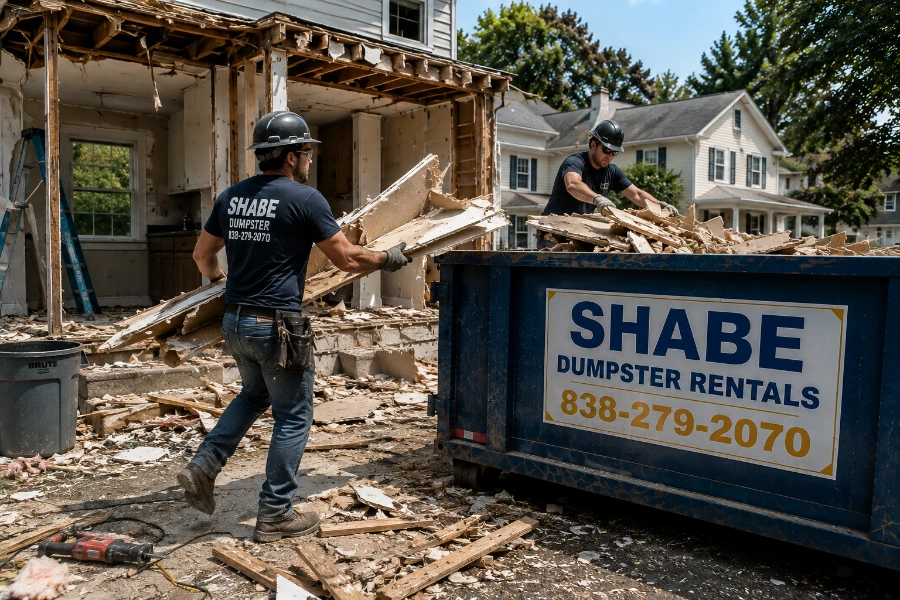
How a Dumpster Fits Into a Demolition Project
Protect What Remains
Cover and isolate areas that are staying so demolition debris and equipment movement do not interfere with finished parts of the property.
Remove Large Components
Doors, cabinets, framing, fixtures, decking, and other large pieces can be dismantled before smaller debris is cleared.
Control the Debris Stream
Move approved material toward the dumpster as demolition continues instead of allowing piles to spread throughout the work area.
Separate Heavy Materials
Concrete, masonry, tile, stone, and other dense material should be managed according to their specific disposal requirements.
Keep Special Materials Out
Chemicals, hazardous materials, appliances, electronics, and other restricted items should be handled through the appropriate route.
Complete the Final Sweep
Once demolition is finished, inspect the work area for nails, fragments, small debris, and remaining approved material.
Can Demolition Debris Be Combined With Other Project Material?
Demolition frequently overlaps with remodeling, construction, landscaping, roofing, or property cleanup. The combined material list should be reviewed before assuming one container is suitable for everything.
What Dumpster Size Is Right for Demolition?
The appropriate dumpster depends on the area being demolished, type of materials, amount of bulky debris, presence of dense materials, and whether additional construction or cleanup is included.
Single-Room Tear-Out
A kitchen, bathroom, bedroom, or other focused demolition may generate a manageable mixed-material load.
Multi-Room Demolition
Removing materials from several rooms can quickly increase both container volume and loading time.
Structural Components
Framing, decking, larger wood sections, masonry, or concrete can alter the practical dumpster requirements.
Demolition + Construction
When cleanup continues directly into reconstruction, the full project debris should be considered before choosing the container.
Dumpster capacity is about more than cubic space. Heavy material, bulky structural pieces, loading method, and disposal requirements can all affect the practical size needed.
Review available containers on our Dumpster Sizes page.
Explore Related Demolition and Dumpster Rental Information
Demolition projects can connect with remodeling, construction, flooring, deck removal, shed removal, roofing, and broader property cleanup.
Demolition Dumpster Rental in Schenectady and Nearby Communities
Residential demolition projects can include interior tear-outs, deck and shed removal, partial structural demolition, and pre-construction clearing throughout Schenectady and nearby communities.
Customers in Schenectady, Rotterdam, Niskayuna, Scotia, and Glenville may have different placement and access considerations depending on the property layout, demolition area, driveway, work zone, equipment, and amount of debris.
For broader local coverage, visit our Service Areas page.
Plan Construction and Demolition Material Disposal Carefully
Demolition can produce substantial amounts of construction and demolition material. Separating reusable or recyclable components where practical can help reduce unnecessary waste while keeping the worksite more organized.
EPA: Sustainable Management of Construction and Demolition Materials
Demolition Dumpster FAQs
What is a demolition dumpster?
It is a dumpster used to collect approved debris generated while existing building materials, rooms, structures, or exterior features are dismantled.
What can I put in a demolition dumpster?
Depending on the service, common approved materials can include wood, drywall, flooring, cabinets, fixtures, and other construction debris. Confirm unusual or heavy materials before loading.
Can drywall go in a demolition dumpster?
Drywall may be accepted for many demolition projects. Confirm the material requirements before loading large quantities.
Can cabinets and fixtures go in a demolition dumpster?
Cabinets and fixtures may be accepted depending on the service. Remove loose contents and identify bulky components before loading.
Can concrete go in a demolition dumpster?
Concrete may require a specific disposal arrangement because of its density and weight. Confirm before mixing concrete with ordinary demolition debris.
Can demolition debris include flooring?
Flooring may be accepted depending on the service. Tile, stone, wood, carpet, and other flooring materials should be identified because their weight and volume differ substantially.
Can I use a demolition dumpster for a kitchen remodel?
A demolition dumpster may be suitable for a kitchen tear-out when the materials are accepted. Cabinets, counters, flooring, drywall, and fixtures should all be considered when estimating the load.
What dumpster size do I need for demolition?
It depends on the rooms or structures being demolished, material types, amount of bulky debris, dense materials, and whether other construction work is included. Review the Dumpster Sizes guide for planning.
Can demolition debris be mixed with household junk?
It may be possible when the materials are compatible and accepted, but combining construction debris with household contents can change the overall material and weight profile.
How much does demolition dumpster rental cost?
There is no universal price. Dumpster size, rental period, location, disposal requirements, and the amount and type of demolition debris can all affect the final cost.
How long should I rent a demolition dumpster?
The appropriate rental period depends on the demolition schedule, project size, number of workers, amount of debris, and whether demolition continues directly into reconstruction.
Can the dumpster be placed near the demolition area?
Placement depends on access, driveway conditions, work-zone layout, delivery requirements, and the safest route for moving debris to the container.
Do I need a permit for a demolition dumpster?
Requirements can depend on where the dumpster is placed. Private property and public right-of-way placement can have different requirements.
Can a demolition dumpster be used for new construction debris too?
Potentially, when the materials are compatible and accepted. When demolition and new construction overlap, describe the complete debris stream before choosing the container.
Need a Dumpster for Demolition in Schenectady?
Tell us what you’re demolishing, which materials will be removed, approximately how much debris the project will generate, and where the property is located so the appropriate dumpster option can be discussed.
Call Now