
Dirt Disposal Dumpster Rental in Schenectady, NY
Excavation, landscaping, grading, drainage, garden work, and other property projects can leave you with more soil than the site can absorb. Dirt disposal requires careful planning because soil is dense and can become heavy quickly. A suitable dumpster or disposal arrangement can provide a practical way to manage approved excess dirt from the project.

Plan Soil Removal Around Weight, Volume, and Material Type
Dirt can seem easy to remove because it is loose and can be moved with shovels, wheelbarrows, or equipment. The challenge appears when the material begins accumulating. Even a modest excavation can produce a surprisingly heavy load.
Whether you are digging for a patio, planting area, drainage system, retaining wall, walkway, or other project, the amount and condition of the soil should be considered before deciding how it will leave the property.
Soil containing rocks, roots, clay, gravel, construction debris, or other mixed material may need different handling from clean, excavated dirt. Identifying the material before the project begins helps prevent disposal problems later.
Dirt is a heavy material. Do not assume a dumpster can be filled completely with soil simply because there is physical space remaining. Weight restrictions and material acceptance should be confirmed before loading.
When Is Dirt Disposal Dumpster Rental Useful?
Residential soil removal can happen during landscaping, excavation, drainage work, hardscape installation, and property improvements.
Landscaping Excavation
Remove excess soil after reshaping planting beds, lawns, elevations, or other landscape areas.
Patio Preparation
Excavating for a patio can produce soil that must be removed before the base material and finished surface are installed.
Drainage Work
French drains, grading improvements, swales, and other drainage projects may create excess excavated soil.
Garden Bed Installation
Digging and reshaping planting areas can leave soil that does not fit back into the finished landscape.
Retaining Wall Projects
Wall construction can require excavation that creates excess dirt alongside the stone, block, or concrete materials.
Small Excavation Projects
Foundations, walkways, steps, utility work, and other residential improvements can leave excavated material behind.

What Kind of Dirt Is Being Removed?
Clean Topsoil
Topsoil from planting beds or grading work may be suitable for reuse elsewhere on the property before disposal is considered.
Clay Soil
Clay can be particularly dense when wet, making weight an important consideration during removal.
Fill Dirt
Excavated fill material may contain a mixture of soil, small stones, and other natural material depending on where it came from.
Rocky Soil
Soil mixed with rocks or aggregate can become significantly heavier and may require different loading considerations.
Soil With Roots
Landscaping excavation may produce dirt mixed with roots, grass, plants, and other organic material that should be identified before disposal.
For a project involving multiple landscape materials, see our Landscaping Dumpster page.
Why Dirt Disposal Is Different From Ordinary Dumpster Projects
Dense
Soil can become heavy very quickly, especially when wet or mixed with clay, rocks, or other dense material.
Moisture Sensitive
Wet soil can weigh substantially more than dry material, changing how much can practically be loaded.
Variable
Dirt can contain roots, stones, gravel, grass, or construction debris, which changes the nature of the load.
Volume Adds Up
Excavation depth multiplied across a large surface area can produce much more soil than homeowners initially expect.
Estimate the soil before excavation begins. Removing a few inches across a large area can create a much larger material load than a small but deeper excavation.
How to Prepare for Dirt Removal
Measure the Excavation
Estimate the area, depth, and total amount of soil that will be removed from the property.
Check Soil Conditions
Consider whether the material contains clay, rocks, roots, gravel, moisture, or other mixed components.
Identify Reuse Opportunities
Determine whether clean soil can be spread, graded, filled, or reused elsewhere before arranging disposal.
Confirm Disposal Requirements
Discuss the soil type and expected quantity before loading so the appropriate disposal option can be selected.
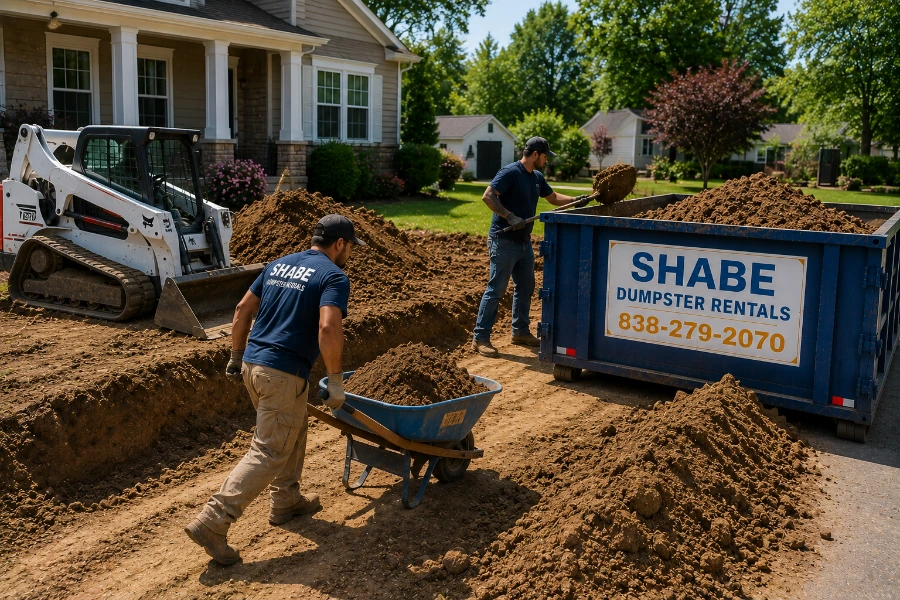
How to Manage Dirt During a Residential Excavation Project
Set Aside Reusable Soil
Keep clean material that can be reused for grading, planting beds, filling, or other parts of the property separate from disposal soil.
Control the Excavation Area
Keep soil piles organized so they do not block driveways, walkways, drainage paths, or access to the work area.
Load in Manageable Amounts
Use appropriate equipment or wheelbarrows to move soil toward the disposal point while maintaining safe access.
Monitor Moisture
Wet soil can become significantly heavier, so conditions may affect how much material can be practically loaded.
Separate Mixed Debris
Remove concrete, wood, roots, trash, and other unrelated materials from soil when the disposal arrangement calls for cleaner material.
Complete the Final Grade
Once the unwanted soil has been removed, finish the excavation, grading, drainage, or landscape preparation according to the project.
Can Dirt Be Mixed With Concrete, Gravel, or Yard Debris?
It depends on the disposal arrangement. Dirt, concrete, gravel, and other dense materials can create a substantially heavier load than ordinary household debris.
What Dumpster Size Is Right for Dirt Disposal?
Dirt disposal should be estimated using the excavation dimensions and material density rather than relying only on container volume.
Garden Excavation
Small planting and garden projects may produce a limited amount of soil that can sometimes be partially reused on the property.
Patio Excavation
Removing several inches of soil across a patio footprint can create a substantial amount of material quickly.
Drainage Excavation
Long trenches can generate more soil than expected even when the excavation is relatively narrow.
Large Landscape Project
Extensive grading, retaining walls, or hardscape preparation may produce a large and heavy excavation load.
Container volume is not the whole calculation. Soil weight, moisture, depth, excavation area, and material condition can determine the practical disposal limit.
Review available containers on our Dumpster Sizes page.
Explore Related Dirt, Landscaping, and Dumpster Rental Information
Dirt removal often happens alongside landscaping, concrete work, gravel installation, grading, drainage, and other exterior projects.
Helpful Pages for Dirt Disposal Projects
Dirt Disposal Dumpster Rental in Schenectady and Nearby Communities
Residential dirt removal projects can come from landscaping, excavation, drainage, grading, patio installation, retaining walls, and other property improvements throughout Schenectady and nearby communities.
Customers in Schenectady, Rotterdam, Niskayuna, Scotia, and Glenville may have different access considerations depending on the excavation area, driveway, equipment access, soil volume, and property layout.
For broader local coverage, visit our Service Areas page.
Reuse Clean Soil Before Arranging Disposal
Excavation projects do not always require every bit of soil to leave the property. Clean material may sometimes be reused for grading, filling, planting areas, or other approved landscape work.
Dirt Disposal Dumpster FAQs
Can dirt go in a dumpster?
Dirt may be accepted for certain disposal arrangements, but soil is extremely heavy and often has specific material and weight requirements. Confirm before loading.
How much dirt can I put in a dumpster?
The allowable amount depends on the container, soil condition, material acceptance, and applicable weight limits. Do not estimate capacity by volume alone.
Is wet dirt heavier than dry dirt?
Yes. Moisture adds weight, which can make wet soil substantially more demanding to transport and dispose of than dry material.
Can I put clay soil in a dumpster?
Clay soil may be accepted depending on the disposal arrangement. Because clay can be especially dense, confirm the material and expected quantity before loading.
Can I mix dirt with gravel?
Gravel and soil are both dense materials. Confirm whether they can be combined and account for the additional weight when planning the load.
Can I mix dirt with concrete?
Concrete and dirt can create a very heavy mixed load. The compatibility and weight requirements should be confirmed before loading either material together.
Can I put roots and grass in a dirt dumpster?
Organic yard material can change the disposal requirements. Separate roots, grass, brush, and other yard waste when the service requires it.
What size dumpster do I need for dirt disposal?
It depends on the excavation area, soil depth, material density, moisture, and whether other heavy materials are included. Review the Dumpster Sizes guide, but confirm the suitability of the selected container for dirt specifically.
Can I reuse dirt instead of disposing of it?
Clean soil may sometimes be reused for grading, filling, planting beds, or other parts of the property. Evaluate reuse options before paying to remove material that can stay on site.
How much does dirt disposal dumpster rental cost?
There is no universal price. Dumpster size, rental period, location, disposal requirements, and the amount and type of soil can all affect the final cost.
Can I place a dirt dumpster in my driveway?
Placement may be possible when the driveway and access conditions are suitable. Because soil creates a heavy load, placement and surface conditions should be considered carefully.
Do I need a permit for a dirt disposal dumpster?
Requirements can depend on where the dumpster is placed. Private property and public right-of-way placement can have different requirements.
Can a dirt dumpster be used for a landscaping project?
It may be appropriate when the material and disposal arrangement allow it. Landscaping projects often contain several different materials, so identify the complete debris list before scheduling.
What should I do if my soil contains rocks or construction debris?
Describe the mixed material before loading. Soil containing rocks, gravel, concrete, roots, or other debris can have different handling and disposal requirements than clean excavated dirt.
Need Dirt Disposal Help in Schenectady?
Tell us what area you’re excavating, approximately how much soil you expect to remove, what condition the material is in, and where the project is located so the appropriate disposal option can be discussed.
Call Now