
Flooring Removal Dumpster Rental in Schenectady, NY
Removing old flooring can create far more debris than the room itself suggests. Carpet, padding, tile, hardwood, laminate, vinyl, underlayment, trim, and adhesive-related material can quickly fill the work area. A dedicated dumpster gives your flooring project a central place for approved removal debris.

Keep Old Flooring and Tear-Out Debris Out of the Work Area
Flooring replacement can be one of the most visible parts of a renovation, but the disposal side of the project is easy to underestimate. A floor may produce several layers of material once the finished surface, underlayment, adhesive, trim, and damaged subfloor sections are removed.
A dumpster gives the crew or homeowner a practical place to collect approved flooring debris while the project moves from room to room. This reduces the need to create temporary piles or make repeated disposal trips.
The right container depends heavily on the flooring material. A carpet tear-out and a ceramic tile demolition may occupy similar floor areas but create very different weight and volume concerns.
Flooring material matters. Carpet, wood, laminate, vinyl, tile, stone, and related underlayment can have different weight, volume, and disposal considerations. Identify the complete material list before choosing a dumpster.
When Is a Flooring Removal Dumpster Useful?
Flooring projects vary from a single-room replacement to whole-home tear-outs involving several different surfaces.
Carpet Removal
Remove old carpet, padding, tack strips, and related material before installing new flooring.
Hardwood Removal
Tear out damaged or outdated hardwood flooring, underlayment, trim, and associated wood material.
Laminate Removal
Clear laminate planks, padding, transition strips, and other installation material from residential rooms.
Vinyl Flooring Removal
Remove sheet vinyl, luxury vinyl, adhesive-backed products, underlayment, and related renovation debris.
Tile Demolition
Ceramic, porcelain, and other tile removal can create a dense, heavy debris stream requiring careful planning.
Whole-Home Flooring Replacement
Multiple rooms can create a substantial mixed flooring load that needs to be considered across the complete project.
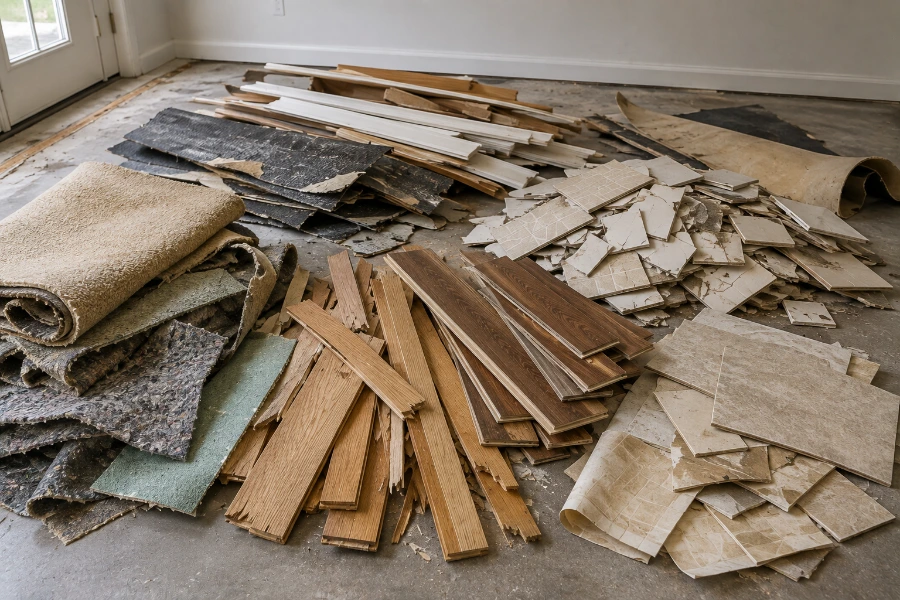
What Materials Can a Flooring Removal Project Generate?
Carpet and Padding
Carpet removal can produce large but relatively lightweight rolls, padding, tack strips, and pieces that need to be gathered before the new flooring is installed.
Hardwood
Old hardwood planks, engineered wood, trim, and underlayment can create a significant wood-based debris load.
Laminate and Vinyl
Floating planks, sheet flooring, luxury vinyl, adhesives, and underlayment may all be removed during the tear-out.
Tile
Ceramic and porcelain tile can generate dense debris, with broken pieces taking up less volume but adding substantial weight.
Subfloor and Trim
Damaged plywood, transition strips, baseboards, and other associated materials may also become part of the demolition load.
For a broader home renovation, see our Construction Dumpster Rental page.
Different Flooring Materials Create Different Dumpster Needs
Carpet
Carpet is bulky and can occupy considerable container space once rolled and bundled with padding.
Hardwood
Wood flooring can be both bulky and relatively heavy, especially when removing multiple rooms.
Vinyl & Laminate
These materials can produce a moderate-volume debris stream, depending on the number of rooms and installation layers.
Tile
Tile is significantly denser, so weight can become the limiting factor well before the container appears full.
Tell us the flooring type, not just the room count. Two homes with the same number of rooms can produce very different disposal loads depending on the flooring material and construction.
How to Prepare for a Flooring Removal Dumpster
Empty the Room
Remove furniture, rugs, decorations, electronics, and other belongings before the flooring demolition begins.
Identify the Layers
Determine whether the project includes carpet, padding, wood, tile, vinyl, underlayment, adhesives, or multiple flooring layers.
Protect the Property
Plan the removal path through doorways, hallways, stairs, and other areas so debris can leave the home without unnecessary damage.
Plan the Load
Estimate the overall material amount and consider weight when selecting the dumpster for the project.

How a Dumpster Fits Into a Flooring Replacement
Clear the Work Area
Remove furniture and personal belongings before the flooring tear-out begins.
Remove the Existing Surface
Pull up carpet, wood, vinyl, laminate, tile, or another finished flooring material according to the project requirements.
Separate the Layers
Keep reusable, recyclable, or special materials separate from the ordinary disposal stream when appropriate.
Break Down Bulky Material
Roll carpet and cut or stack long materials safely where practical to make loading more efficient.
Manage Heavy Debris
Tile, stone, concrete-based material, and other dense debris should be monitored carefully for weight.
Finish With the Subfloor
After the finished flooring is removed, inspect for damaged underlayment or subfloor sections that also need to be taken out.
Can Flooring Removal Be Combined With Other Renovation Debris?
Flooring replacement frequently happens as part of a larger remodeling project. The combined material list should be reviewed before deciding whether one dumpster can serve the complete job.
What Dumpster Size Is Right for Flooring Removal?
The correct dumpster depends on the square footage being removed, type of flooring, number of layers, room count, and whether other renovation materials are part of the same project.
One-Room Carpet
Carpet and padding from a small room can create a bulky but relatively lightweight debris load.
Multiple Rooms
Whole-floor or multi-room replacement can generate substantial volume as rolled flooring, padding, trim, and underlayment add up.
Tile Removal
Tile can occupy less space than carpet while weighing significantly more, making weight planning particularly important.
Flooring + Remodel
Adding cabinets, drywall, fixtures, or other construction debris changes the total project requirements.
Square footage is only one part of the estimate. Flooring layers, material density, underlayment, trim, and additional renovation debris can significantly affect container needs.
Review available containers on our Dumpster Sizes page.
Explore Related Flooring and Dumpster Rental Information
Flooring removal often overlaps with kitchen, bathroom, home cleanout, and larger construction projects.
Flooring Removal Dumpster Rental in Schenectady and Nearby Communities
Flooring replacement projects can range from a single room to whole-home renovations throughout Schenectady and nearby communities.
Customers in Schenectady, Rotterdam, Niskayuna, Scotia, and Glenville may have different access and placement considerations depending on the property, driveway, number of rooms, flooring material, and total renovation debris.
For broader local coverage, visit our Service Areas page.
Reuse and Recycle Flooring Materials Where Practical
Flooring projects can generate wood, cardboard, carpet, metal, plastics, and other materials. Separating suitable materials for reuse or recycling before disposal can help reduce unnecessary waste.
Flooring Removal Dumpster FAQs
What is a flooring removal dumpster?
It is a dumpster used to collect approved flooring demolition debris during carpet, hardwood, laminate, vinyl, tile, or other flooring replacement projects.
Can carpet go in a flooring removal dumpster?
Carpet may be accepted depending on the service. Carpet and padding can be bulky, so they should be considered when estimating container volume.
Can hardwood flooring go in a dumpster?
Hardwood may be accepted depending on the service. Reusable boards and suitable wood may be separated before disposal when practical.
Can laminate flooring go in a dumpster?
Laminate may be accepted depending on the disposal arrangement. Include underlayment, trim, and other removed materials when estimating the project load.
Can vinyl flooring go in a dumpster?
Vinyl flooring may be accepted depending on the service. Identify sheet flooring, luxury vinyl, adhesives, and other related material before loading.
Can tile go in a flooring removal dumpster?
Tile may be accepted, but ceramic and porcelain flooring are dense and can create significant weight. Confirm the requirements before loading.
Can underlayment and padding go in the same dumpster?
These materials may be accepted with the primary flooring debris when compatible. Confirm the complete material list before scheduling the container.
What dumpster size do I need for flooring removal?
It depends on the square footage, flooring type, number of layers, rooms involved, and whether other renovation debris is included. Review the Dumpster Sizes guide for planning.
Is carpet heavier than tile?
Carpet is generally bulkier relative to its weight, while tile is much denser. The practical dumpster constraint can therefore differ depending on the material and amount being removed.
Can I combine flooring removal with kitchen remodeling?
Potentially, when the materials are compatible and accepted. Cabinets, countertops, flooring, drywall, and fixtures should all be included when estimating the complete project.
How long should I rent a dumpster for flooring removal?
The appropriate rental period depends on the number of rooms, project size, demolition pace, installation schedule, and amount of debris being generated.
How much does flooring removal dumpster rental cost?
There is no universal price. Dumpster size, rental period, location, disposal requirements, and the amount and type of flooring debris can all affect the final cost.
Can the dumpster be placed in my driveway?
Driveway placement may be possible when there is adequate space, access, and a practical loading route from the home to the container.
Do I need a permit for a flooring removal dumpster?
Requirements can depend on where the dumpster is placed. Private property and public right-of-way placement can have different requirements.
Need a Dumpster for Flooring Removal in Schenectady?
Tell us the approximate square footage, type of flooring being removed, number of rooms involved, and where the project is located so the appropriate dumpster option can be discussed.
Call Now