
Kitchen Remodel Dumpster Rental in Schenectady, NY
A kitchen remodel can turn one room into a steady source of demolition debris. Cabinets, countertops, flooring, drywall, fixtures, appliances, packaging, and other materials can accumulate quickly. A dedicated dumpster gives your project a central place for approved debris from demolition through final cleanup.
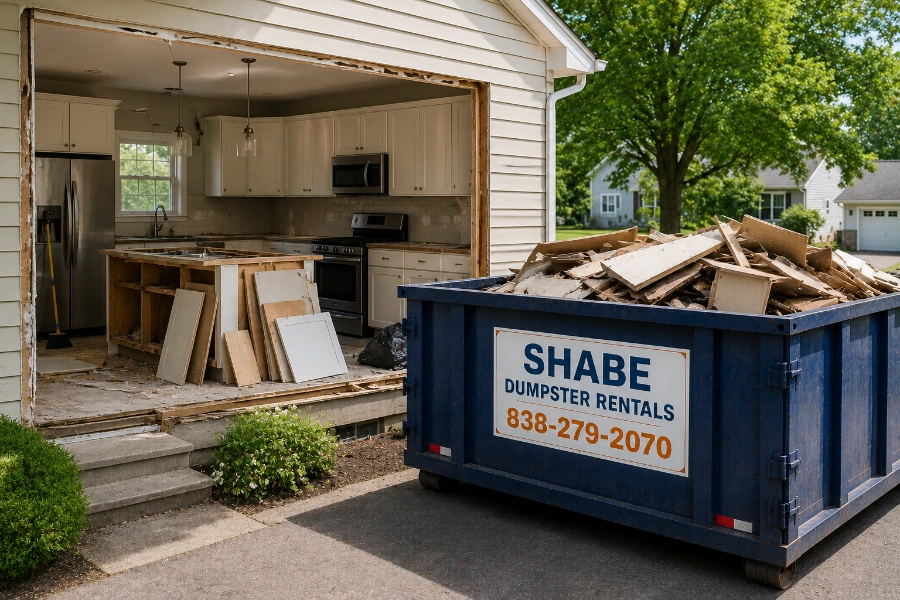
Keep Kitchen Remodeling Debris Under Control
Kitchen renovations often create debris in several stages. First, existing cabinets, countertops, flooring, fixtures, and appliances may need to be removed. Then the project can produce drywall, framing, packaging, and installation waste.
A dumpster gives the remodeling team a designated location for approved debris throughout the project. Rather than creating piles inside the home, along the driveway, or around the yard, material can be moved out of the work area as demolition progresses.
This is especially useful for projects where demolition and installation happen over multiple days and the debris needs to stay contained between work stages.
Kitchen renovations can contain several different material types. Appliances, electrical components, plumbing fixtures, flooring, drywall, cabinetry, and other materials may have different disposal requirements. Confirm acceptance before loading.
When Is a Kitchen Remodel Dumpster Useful?
The amount of debris depends on how extensive the renovation is and which existing materials are being removed.
Cabinet Replacement
Removing old cabinets can generate boxes, doors, shelves, trim, hardware, and larger structural pieces.
Countertop Replacement
Countertops can create bulky demolition debris, especially when the renovation includes the removal of multiple sections and supports.
Flooring Replacement
Old tile, laminate, vinyl, wood, carpet, or underlayment may need to be removed before the new kitchen floor is installed.
Full Kitchen Renovation
A complete remodel may combine cabinetry, countertops, flooring, drywall, fixtures, appliances, and demolition debris.
Layout Changes
Changing the kitchen footprint can add wall, framing, drywall, flooring, and other construction debris to the project.
Pre-Sale Kitchen Update
Property owners may remove outdated finishes and fixtures before preparing a home for sale or renovation.
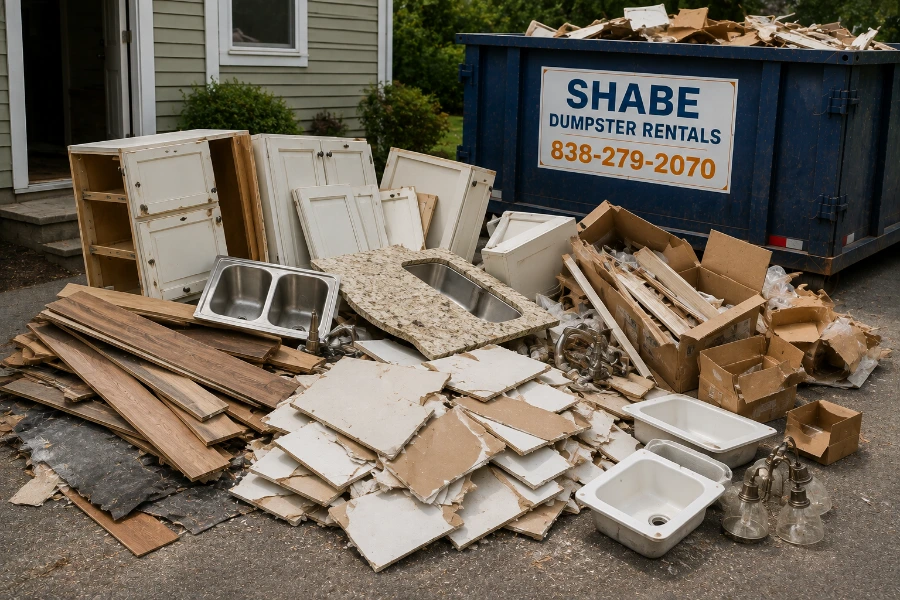
What Materials Come From a Kitchen Remodel?
Cabinets
Old cabinet boxes, doors, drawers, shelving, trim, and hardware can create a large amount of bulky material during a kitchen demolition.
Countertops
Laminate, wood, solid-surface, stone, and other countertops can produce heavy or awkwardly shaped demolition debris.
Flooring
Tile, vinyl, laminate, engineered wood, carpet, padding, and underlayment may all become part of the removal load.
Drywall and Wall Material
Kitchen layout changes can create drywall, framing, trim, and other construction debris.
Fixtures
Sinks, faucets, lighting fixtures, shelving hardware, and other components may need to be removed during the renovation.
Packaging and Installation Waste
New cabinets, flooring, appliances, and fixtures can arrive with cardboard, plastic wrapping, pallets, and other approved packaging debris.
For a flooring-focused project, see our Flooring Removal Dumpster page.
Why Kitchen Remodel Debris Needs Careful Planning
Bulky
Cabinets, countertops, doors, and flooring can take up substantial space even when the overall debris weight is moderate.
Mixed
Kitchen demolition can create wood, drywall, metal, tile, plastic, glass, and other material types at the same time.
Heavy
Tile, stone countertops, ceramics, and other dense materials can affect weight planning even when the container still has room.
Ongoing
Remodeling debris can be generated gradually over several days, making an on-site container useful throughout the project.
Share the full renovation scope before selecting a dumpster. A kitchen remodel involving cabinets and flooring has different planning needs from a small fixture replacement.
How to Prepare for a Kitchen Remodel Dumpster
Empty the Kitchen
Remove food, dishes, small appliances, cookware, personal belongings, and items that will remain in the home.
Identify Utilities
Determine where electrical, water, gas, and other utility connections are located before demolition begins.
Inventory the Removal
List cabinets, counters, flooring, drywall, fixtures, appliances, and other materials that will be removed.
Plan the Loading Route
Keep the path from the kitchen to the dumpster clear so debris can be moved out without blocking the rest of the property.
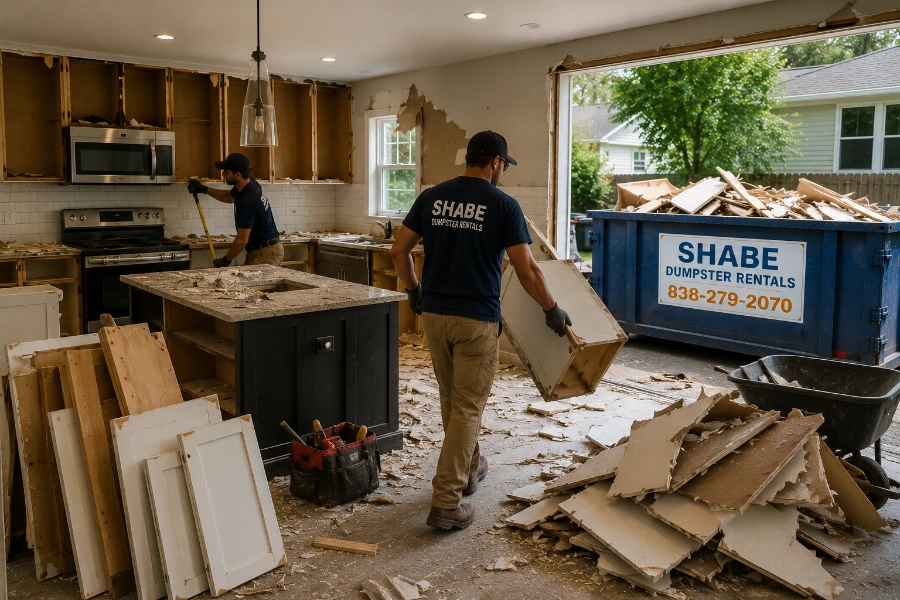
How a Dumpster Fits Into a Kitchen Remodel
Protect the Remaining Home
Establish a clear route through the property before demolition and keep unnecessary belongings away from the work area.
Remove Existing Fixtures
Cabinets, counters, appliances, flooring, and other components can be removed according to the renovation plan.
Consolidate Demolition Debris
Move approved material toward the dumpster as the work progresses rather than allowing piles to build up inside the kitchen.
Separate Special Materials
Appliances, electronics, chemicals, and other materials with unique disposal requirements should be kept outside the ordinary debris stream.
Manage Installation Waste
During installation, packaging, damaged materials, and other approved renovation debris can continue going into the container.
Complete the Final Cleanup
After installation, remove remaining packaging and project debris so the kitchen is ready for its final cleaning and use.
Can a Kitchen Remodel Dumpster Handle Other Renovation Debris?
Kitchen renovations frequently overlap with other home improvement projects. The materials should be identified before assuming they can all share one container.
What Dumpster Size Is Right for a Kitchen Remodel?
The appropriate container depends on the scope of demolition, kitchen layout, amount of cabinetry, countertop material, flooring type, drywall removal, and whether other rooms are being renovated.
Light Kitchen Update
A cosmetic project with limited removal may generate a relatively small amount of debris.
Cabinet & Counter Replacement
Removing cabinets, countertops, trim, and related components can create a sizable bulky load.
Full Kitchen Demolition
A complete tear-out involving cabinets, flooring, drywall, and fixtures can produce considerably more material.
Kitchen + Whole-Home Remodel
When multiple rooms are being renovated, the container should be selected around the full project rather than the kitchen alone.
Dense materials can change the calculation. Tile, stone, ceramic, and other heavy materials can create weight limits before a dumpster looks visually full.
Review available containers on our Dumpster Sizes page.
Explore Related Remodeling and Dumpster Rental Information
A kitchen remodel can connect with flooring removal, bathroom work, residential renovations, construction, and broader home cleanouts.
Helpful Pages for Kitchen Remodeling Projects
Kitchen Remodel Dumpster Rental in Schenectady and Nearby Communities
Kitchen renovation projects can range from cabinet and countertop updates to complete demolition and reconstruction throughout Schenectady and nearby communities.
Customers in Schenectady, Rotterdam, Niskayuna, Scotia, and Glenville may have different dumpster placement considerations depending on the driveway, property layout, renovation area, access route, and amount of debris.
For broader local coverage, visit our Service Areas page.
Manage Kitchen Remodeling Debris Responsibly
Kitchen renovations can generate a mixture of wood, metal, drywall, flooring, plastics, packaging, and other construction materials. Separating reusable or recyclable components where practical can help reduce unnecessary waste.
EPA: Sustainable Management of Construction and Demolition Materials
Kitchen Remodel Dumpster FAQs
What is a kitchen remodel dumpster?
It is a dumpster used to collect approved demolition and renovation debris generated while remodeling a kitchen.
What can I put in a kitchen remodel dumpster?
Depending on the service, approved materials may include cabinets, flooring, drywall, wood, fixtures, and other renovation debris. Confirm unusual materials before loading.
Can kitchen cabinets go in a dumpster?
Cabinets may be accepted depending on the service. Remove loose contents and consider whether usable cabinets or hardware can be reused or donated before disposal.
Can countertops go in a dumpster?
Countertops may be accepted depending on material and service requirements. Stone and other dense materials require particular attention to weight.
Can I put kitchen flooring in the dumpster?
Flooring may be accepted depending on the material and disposal arrangement. Tile and other dense materials can affect weight planning.
Can drywall from a kitchen remodel go in the dumpster?
Drywall may be accepted for some renovation projects. Confirm the material requirements before loading a large amount.
Can appliances go in a kitchen remodel dumpster?
Appliances may require special handling and may not be accepted. Identify refrigerators, ovens, dishwashers, and other appliances before disposal.
What dumpster size do I need for a kitchen remodel?
It depends on the size of the kitchen, demolition scope, cabinets, countertops, flooring, drywall, fixtures, and whether other rooms are included. Review the Dumpster Sizes guide for planning.
Is a kitchen remodel dumpster only for demolition debris?
Not necessarily. Depending on the service, approved installation packaging and other project-related debris may also be handled in the container.
Can I use one dumpster for a kitchen and bathroom remodel?
Potentially, when the materials are compatible and accepted. Combining both projects can significantly increase the amount of debris that needs to be planned for.
How long should I rent a dumpster for a kitchen remodel?
The appropriate rental period depends on demolition and installation schedules, project size, contractor timing, and how much debris will be generated throughout the renovation.
How much does a kitchen remodel dumpster cost?
There is no universal price. Dumpster size, rental period, location, disposal requirements, and the amount and type of renovation debris can all affect the final cost.
Can a dumpster be placed in the driveway during a kitchen remodel?
Driveway placement may be possible when the property has adequate space and access. The location should also allow safe movement of demolition debris between the house and container.
Do I need a permit for a kitchen remodeling dumpster?
Requirements can depend on where the dumpster is placed. Private property and public right-of-way placement can have different requirements.
Need a Dumpster for Your Kitchen Remodel in Schenectady?
Tell us the size of the kitchen, what materials are being removed, whether flooring or drywall is included, and where the project is located so the appropriate dumpster option can be discussed.
Call Now