
Landscaping Dumpster Rental in Schenectady, NY
Landscaping projects can produce much more debris than a regular household waste service can handle. Removing soil, sod, roots, branches, shrubs, old landscape materials, edging, and hardscape debris can quickly turn a yard improvement into a major cleanup. A landscaping dumpster provides a central place for approved project material while the property is transformed.

Keep Landscape Renovation Debris Off the Property
A landscaping project can involve excavation, vegetation removal, grading, hardscape demolition, planting-bed reconstruction, or replacement of old outdoor features. Each stage can create a different type of debris.
A dumpster gives homeowners and landscape crews a designated place for approved material while the work progresses. Instead of creating multiple debris piles around the yard, material can be consolidated into one controlled disposal area.
The most important planning step is identifying what the project will actually remove. Clean soil, roots, branches, sod, concrete, gravel, wood, and mixed landscape debris can have different handling requirements.
Landscaping debris is not one single material. Soil, concrete, branches, roots, gravel, mulch, and treated wood can behave very differently inside a dumpster. Confirm the complete material list before loading.
When Is a Landscaping Dumpster Useful?
Outdoor renovations can range from a simple yard cleanup to a complete redesign involving excavation and hardscape removal.
Landscape Bed Renovation
Remove old soil, roots, plants, edging, mulch, and other material before rebuilding planting beds.
Yard Regrading
Excavation and reshaping can leave excess soil that needs to be reused or removed from the property.
Patio Preparation
Preparing an area for a new patio may involve sod, soil, old concrete, gravel, or other existing landscape materials.
Shrub & Root Removal
Removing mature shrubs and their root systems can create large, awkward organic debris that needs a collection point.
Retaining Wall Cleanup
Rebuilding a retaining wall may generate old blocks, soil, gravel, broken concrete, and other heavy materials.
Complete Yard Renovation
A full landscape redesign can combine vegetation removal, excavation, hardscape demolition, and general property cleanup.
What Can a Landscaping Dumpster Help Remove?
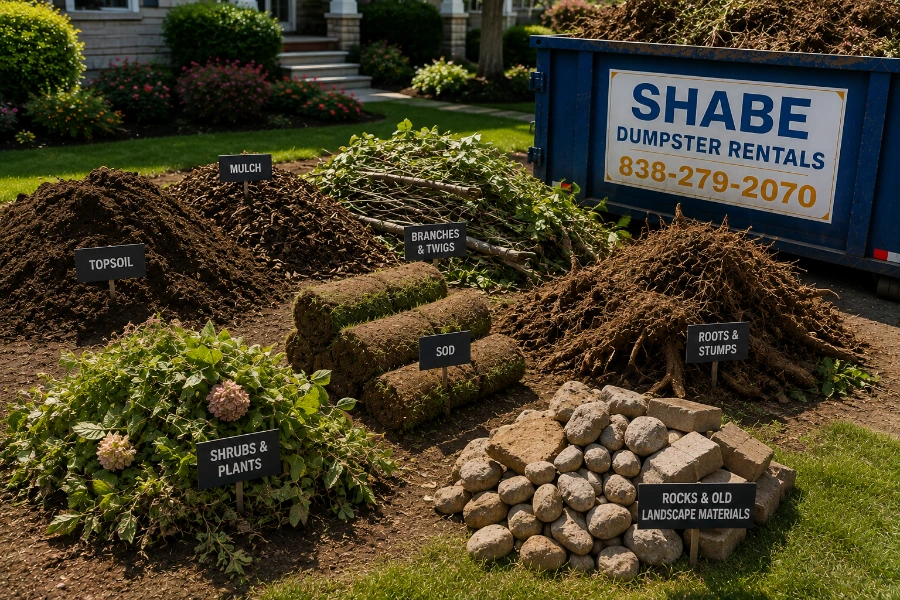
Soil and Sod
Yard renovations may produce excavated soil, clay, topsoil, and sections of sod that no longer belong in the finished landscape.
Branches and Brush
Shrub trimming, small tree work, and landscape clearing can create branches and brush that need to be handled separately when required.
Roots and Stumps
Root systems and smaller woody debris can add considerable bulk to a landscaping cleanup.
Old Landscape Materials
Broken edging, old planters, landscape fabric, decorative features, and other unwanted outdoor materials may be removed during the renovation.
Hardscape Debris
Landscaping work may also involve concrete, pavers, blocks, gravel, or other dense materials that require separate consideration.
For soil-specific disposal information, see our Dirt Disposal Dumpster page.
Different Landscaping Materials Need Different Planning
Organic
Branches, roots, brush, shrubs, and other vegetation can be bulky even when the material is relatively light.
Dense
Soil, gravel, concrete, pavers, and retaining-wall materials can create significant weight.
Bulky
Sod, shrubs, root balls, branches, and landscape structures can occupy substantial container space.
Mixed
A single landscaping project can create several material streams that should not automatically be combined.
Describe the landscape project in detail. Telling the dumpster provider only that you have “yard debris” may not be enough when the project also includes soil, concrete, gravel, or construction material.
How to Prepare for a Landscaping Dumpster
Map the Project
Identify which beds, lawn areas, structures, trees, hardscape, or other outdoor features will be removed.
Separate Materials
Distinguish soil, vegetation, concrete, wood, gravel, and general debris before demolition and excavation create a mixed pile.
Identify Reuse
Determine whether clean soil, mulch, stone, plants, or other landscape materials can be reused elsewhere on the property.
Plan Container Access
Choose a practical location that allows delivery while keeping equipment and workers moving safely through the yard.
How a Dumpster Fits Into a Landscaping Project
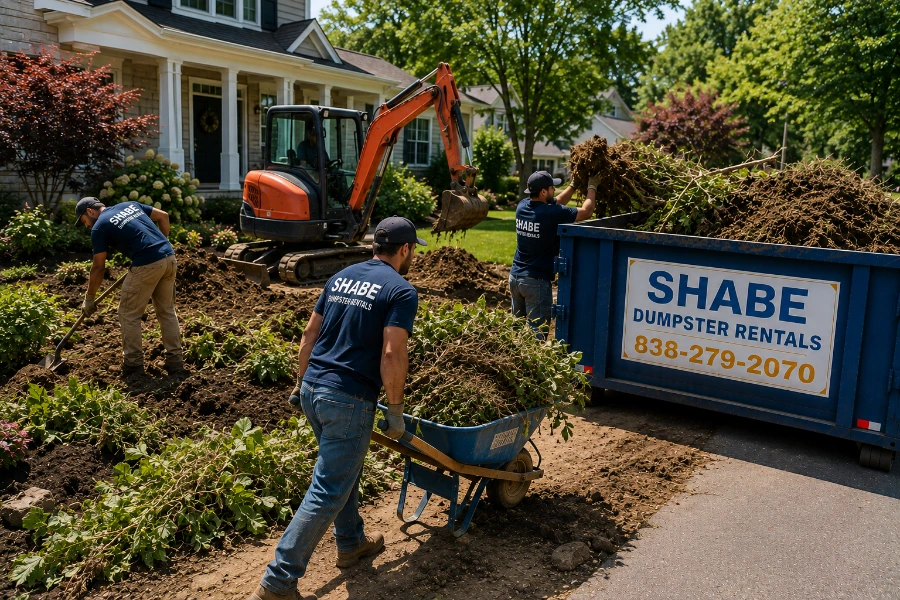
Clear Existing Features
Remove furniture, decorative items, planters, temporary structures, and other belongings from the work area.
Remove Vegetation
Clear unwanted shrubs, roots, brush, and other approved organic material as the landscape is opened up.
Excavate the Area
Remove soil or existing hardscape required for patios, planting beds, drainage, walls, paths, or other improvements.
Separate Dense Materials
Keep concrete, pavers, gravel, and other heavy materials identified separately where required by the disposal arrangement.
Load in Manageable Stages
Move material toward the dumpster as the project progresses instead of allowing large mixed piles to build up around the yard.
Complete the Landscape Cleanup
Once the new landscape work is underway, remove remaining approved debris so the finished area is clean and ready for use.
Can Landscaping Debris Be Combined With Other Outdoor Materials?
Landscaping projects often overlap with tree removal, deck demolition, shed removal, concrete work, or yard cleanup. The combined debris should be reviewed before deciding whether one dumpster can handle everything.
What Dumpster Size Is Right for a Landscaping Project?
The appropriate container depends on the landscape area being renovated, amount of soil or vegetation removed, presence of hardscape, and whether other property work is happening at the same time.
Garden Cleanup
A limited planting-bed refresh may produce a smaller amount of roots, old plant material, soil, and landscape debris.
Yard Renovation
Reworking several beds or larger lawn areas can generate substantial soil, sod, and vegetation debris.
Hardscape Removal
Removing patios, walls, pavers, or concrete can significantly increase the weight of the project.
Full Property Renovation
Combining landscaping with tree removal, deck work, shed demolition, or other projects changes the total debris estimate.
Estimate material type as well as quantity. A yard containing mostly branches requires different planning from one containing several inches of excavated soil or broken concrete.
Review available containers on our Dumpster Sizes page.
Explore Related Landscaping and Dumpster Rental Information
Landscaping projects can overlap with dirt removal, yard waste, tree work, deck demolition, concrete disposal, and other outdoor property improvements.
Landscaping Dumpster Rental in Schenectady and Nearby Communities
Residential landscaping projects can include planting-bed reconstruction, excavation, grading, hardscape removal, vegetation clearing, and complete yard renovations throughout Schenectady and nearby communities.
Customers in Schenectady, Rotterdam, Niskayuna, Scotia, and Glenville may have different access considerations depending on driveway placement, yard layout, fencing, equipment access, project size, and the materials being removed.
For broader local coverage, visit our Service Areas page.
Reuse Landscape Materials Before Disposal
Landscaping projects often produce materials that can sometimes be reused on the same property. Clean soil, plants, mulch, stone, and other landscape materials may have a second use before disposal is considered.
Landscaping Dumpster FAQs
What is a landscaping dumpster?
It is a dumpster used to collect approved debris from landscaping and outdoor property projects, such as vegetation, soil, old landscape materials, and other accepted debris.
What can I put in a landscaping dumpster?
Accepted materials depend on the service. Common landscaping debris can include vegetation, roots, soil, sod, and other project material when specifically approved.
Can I put dirt in a landscaping dumpster?
Dirt may be accepted for certain disposal arrangements, but it is very heavy. Confirm the soil type, quantity, and applicable weight requirements before loading.
Can I put branches and brush in a landscaping dumpster?
Branches and brush may be accepted depending on the service and material requirements. Large woody debris should be identified before loading.
Can I put sod in a landscaping dumpster?
Sod may be accepted depending on the disposal arrangement. Because sod contains soil and moisture, it can become significantly heavier than it appears.
Can roots and shrubs go in the dumpster?
Roots and shrubs may be accepted depending on the service. Large root balls can be bulky and heavy, so they should be included when estimating the project load.
Can I put concrete and soil in the same dumpster?
They may require separate planning because both materials are dense. Confirm whether the specific disposal arrangement allows them to be combined.
What dumpster size do I need for landscaping?
It depends on the project area, amount of vegetation, soil, hardscape, roots, and other material being removed. Review the Dumpster Sizes guide, while considering the specific weight and material requirements of the landscape debris.
Can I combine landscaping and tree removal debris?
Potentially, when the materials are compatible and accepted. Tree branches, roots, soil, and other landscaping debris should all be included when estimating total volume.
Can I use a landscaping dumpster for a deck removal?
A combined project may be possible when the materials are accepted, but deck lumber and landscaping debris should be identified separately before selecting a container.
How long should I rent a landscaping dumpster?
The appropriate rental period depends on project size, excavation pace, landscaping crew schedule, weather, and how continuously debris will be generated.
How much does a landscaping dumpster cost?
There is no universal price. Dumpster size, rental period, location, disposal requirements, and the amount and type of landscaping debris can all affect the final cost.
Can the dumpster be placed near the landscaping work area?
Placement depends on delivery access, driveway or surface conditions, yard layout, and the safest practical route between the work area and the container.
Do I need a permit for a landscaping dumpster?
Requirements can depend on where the dumpster is placed. Private property and public right-of-way placement can have different requirements.
Need a Dumpster for Your Landscaping Project in Schenectady?
Tell us what you’re removing, including soil, vegetation, branches, roots, hardscape, or other debris, approximately how much material you have, and where the project is located so the appropriate dumpster option can be discussed.
Call Now