
Roof Replacement Dumpster Rental in Schenectady, NY
A roof replacement can produce a large volume of shingles, underlayment, flashing, damaged roofing material, wood, and cleanup debris in a short period of time. A dedicated dumpster keeps approved tear-off material contained at the job site while the roofing project moves forward.

Keep Roof Tear-Off Debris Off the Property
Roof replacement is a debris-heavy project. Even when the roofing crew works efficiently, old shingles, underlayment, flashing, damaged wood, packaging, and other materials can accumulate quickly around the house.
A dumpster creates a designated collection point for approved roofing debris. Instead of stacking tear-off material around the driveway or transporting it away in repeated loads, the crew can move material directly toward the container during the project.
This can be particularly useful for full roof replacements where debris is generated continuously throughout the tear-off and installation stages.
Roofing debris is heavy. Shingles and other dense roofing materials can create significant weight even when the dumpster still appears to have available volume. Follow the service’s material and loading requirements.
When Is a Roof Replacement Dumpster Useful?
Different roofing projects can generate different amounts and types of debris.
Full Roof Replacement
A complete tear-off and replacement creates a substantial stream of shingles, underlayment, flashing, and related roofing debris.
Roof Tear-Off
Removing an existing roof before installation can generate debris faster than many other residential improvement projects.
Multiple Roof Areas
Complex homes with garages, additions, dormers, or multiple roof sections can increase the overall amount of material removed.
Roof + Gutter Work
Roofing projects may also generate old gutters, downspouts, damaged trim, and associated exterior materials.
Roof + Exterior Repairs
Siding, fascia, soffit, wood, and other repair debris can increase the total load when several exterior tasks are combined.
Roofing Contractor Cleanup
Contractors may need an on-site container that remains available throughout the tear-off and installation process.
What Materials Come From a Roof Replacement?
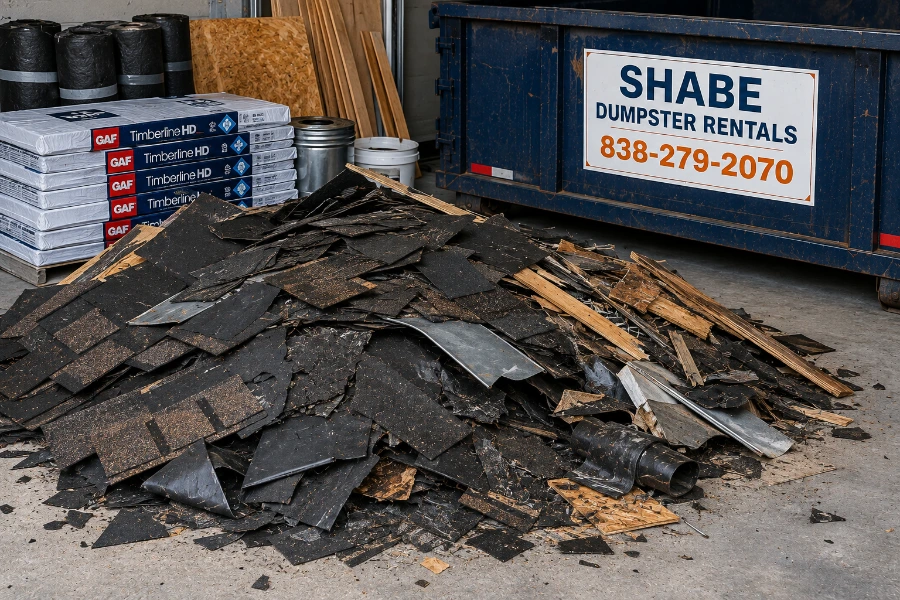
Asphalt Shingles
Removed shingles can account for a large portion of the debris from a typical residential roof replacement.
Underlayment
Roofing felt, synthetic underlayment, and related membrane materials may be removed during the tear-off.
Flashing
Old metal flashing around roof edges, valleys, vents, and other transitions can become part of the demolition load.
Wood Sheathing
Damaged plywood, boards, or other roof decking may need removal when structural deterioration is discovered.
Roofing Accessories
Old vents, trim, fasteners, sealants, and other roofing components may also need to be cleared from the work area.
For a more detailed material guide, see our Roofing Shingles Disposal page.
Why Roofing Debris Needs Different Dumpster Planning
Dense
Shingles and roofing materials can become heavy quickly, making weight an important consideration alongside container volume.
Continuous
During a tear-off, debris can be generated throughout the workday rather than all at once.
Bulky
Bundled material, wood, and larger roofing components can take up substantial space depending on how they are handled.
Weather Sensitive
Roofing projects are exposed to changing weather conditions, so keeping tear-off debris contained helps maintain a cleaner site.
Tell the dumpster provider that the load is roofing debris. Roofing material has different density and weight characteristics from ordinary household cleanout debris.
How to Prepare a Property for Roof Replacement Cleanup
Choose the Placement Area
Identify a practical location with adequate access for delivery, pickup, and the roofing project’s loading process.
Clear the Work Zone
Move vehicles, outdoor furniture, decorations, and other belongings away from the roofing and dumpster work areas.
Review the Debris
Identify shingles, underlayment, wood, flashing, gutters, and other materials that will be generated during the replacement.
Confirm Capacity
Choose a dumpster based on the roof size, material type, expected tear-off amount, and applicable weight requirements.
How a Dumpster Fits Into a Roof Replacement
Delivery Before Tear-Off
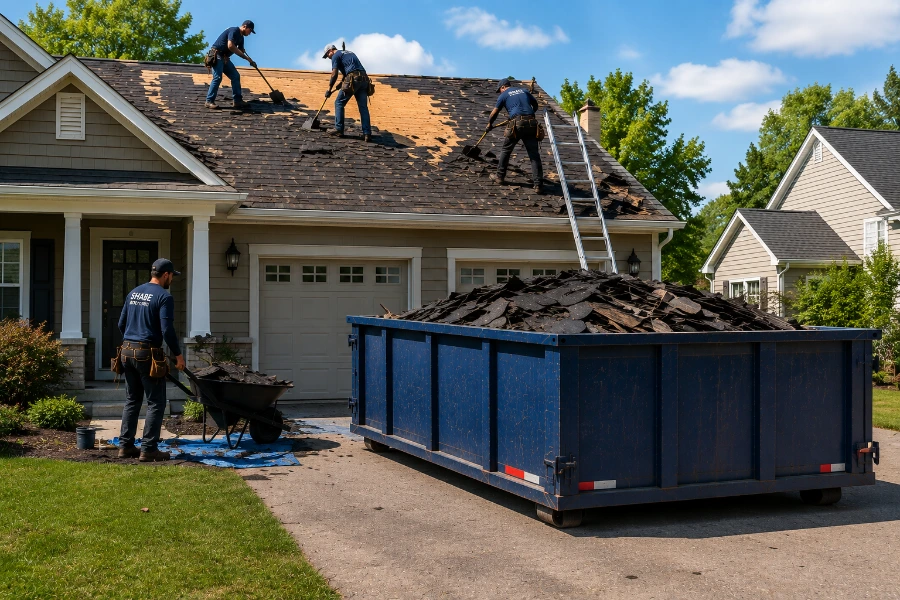
Having the container available before demolition begins gives the crew a designated place for removed roofing material.
Controlled Tear-Off
Old roofing is removed section by section while approved debris is directed toward the dumpster.
Material Collection
Shingles, underlayment, flashing, and other accepted tear-off materials are consolidated rather than scattered across the property.
Installation Phase
Packaging, damaged material, and remaining approved project debris can be managed as the new roof is installed.
Final Cleanup
Once the roof is complete, the work area can be swept and checked for remaining project debris before the container is removed.
Can Roofing Debris Be Combined With Other Project Materials?
Sometimes a roof replacement happens alongside other exterior work. The materials should be identified before assuming they can share one container.
What Dumpster Size Is Right for a Roof Replacement?
The right container depends on the roof area, number of roofing layers being removed, material type, pitch and complexity of the roof, and whether other debris is included.
Small Roof
A smaller residential roof with limited tear-off material may require less container capacity.
Full Single-Story Roof
A complete tear-off across a standard residence can create a large, dense debris stream that requires careful planning.
Multiple Layers
Removing multiple existing roofing layers can substantially increase the amount of debris generated.
Roof + Exterior Work
Combining roofing with siding, gutters, wood repairs, or other exterior work changes the overall debris profile.
Roofing dumpsters should be sized by both volume and weight. A container that looks large enough may still become overweight when filled with dense shingles and roofing material.
Review the available container options on our Dumpster Sizes page.
Explore Related Roofing and Dumpster Rental Information
Roof replacement can connect with roofing material disposal, construction, exterior renovation, and general residential cleanup.
Roof Replacement Dumpster Rental in Schenectady and Nearby Communities
Residential roof replacements can range from small repairs and partial tear-offs to complete roof removal and replacement projects throughout Schenectady and nearby communities.
Customers in Schenectady, Rotterdam, Niskayuna, Scotia, and Glenville may have different placement and access considerations depending on the driveway, roof layout, property size, work area, and amount of roofing debris.
For broader local coverage, visit our Service Areas page.
Plan Roofing Material Disposal Responsibly
Roofing projects can create a large amount of construction and demolition material. Separating suitable materials and following appropriate disposal practices can help keep the project site organized and reduce unnecessary waste.
EPA: Sustainable Management of Construction and Demolition Materials
Roof Replacement Dumpster FAQs
What is a roof replacement dumpster?
It is a dumpster used to collect approved roofing tear-off debris and related project material during a roof replacement.
Can I put shingles in a dumpster?
Roofing shingles may be accepted depending on the dumpster service and disposal arrangement. Confirm roofing material acceptance before loading.
How much does a roof replacement dumpster cost?
There is no universal price. Dumpster size, rental period, location, disposal requirements, and the amount and type of roofing debris can all affect the final cost.
What size dumpster do I need for a roof replacement?
It depends on the roof area, number of layers being removed, material density, roof complexity, and whether other debris is included. Review the Dumpster Sizes guide for broader planning.
Can I put roofing shingles and wood in the same dumpster?
Some services may allow compatible roofing and construction materials together, but acceptance should be confirmed before loading.
Why are roofing dumpsters different from household cleanout dumpsters?
Roofing debris is generally denser and can become heavy quickly. Weight planning is therefore especially important when choosing a container for shingles and tear-off material.
Can I put old gutters in a roofing dumpster?
Gutters may be accepted depending on the service. Identify them when discussing the roofing debris before the container is loaded.
Can I put flashing in the dumpster?
Metal flashing may have recycling value and may have separate handling considerations. Confirm the preferred disposal route.
Can a roof replacement dumpster be used for other construction debris?
Potentially, when the materials are compatible and accepted. Explain the complete project material list before choosing the dumpster.
Can I use the same dumpster for roofing and a home cleanup?
It depends on the material mix and service requirements. Roofing debris is dense, so adding household contents may change the container planning and weight considerations.
Should the dumpster arrive before the roof tear-off begins?
Having the container available before tear-off can make debris handling more organized because removed roofing material has a designated collection point from the beginning.
Can a dumpster be placed in the driveway for a roof replacement?
Driveway placement may be possible when space, access, and surface conditions are suitable. The placement should allow delivery, roofing work, and safe pickup.
Do I need a permit for a roofing dumpster?
Requirements can depend on where the dumpster is placed. Private property and public right-of-way placement can have different requirements.
Need a Dumpster for Your Roof Replacement in Schenectady?
Tell us the approximate roof size, what materials are being removed, whether the roof has multiple layers, and where the project is located so the appropriate dumpster option can be discussed.
Call Now