
Tree Removal Dumpster Rental in Schenectady, NY
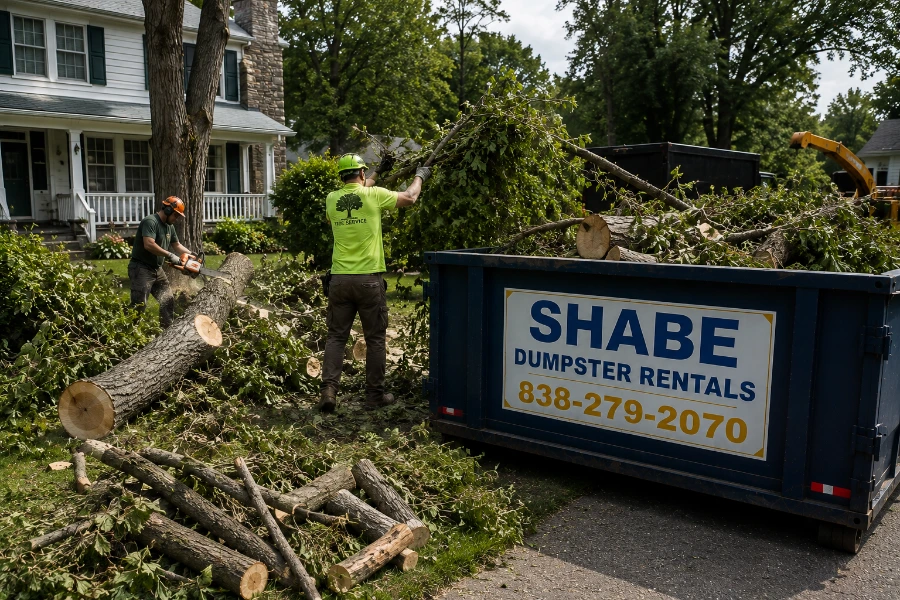
Tree removal can leave a property with far more debris than the standing tree suggests. Branches, limbs, logs, brush, roots, and related cleanup material can quickly fill a yard. A tree removal dumpster provides a central place for approved debris while the property is cleared.
Keep Tree Removal Debris Under Control From Start to Finish
Removing a tree is only part of the project. Once the trunk, limbs, branches, and brush are on the ground, the property still needs to be cleared and prepared for whatever comes next.
An on-site dumpster can give the cleanup crew a central collection point for approved tree debris. This is especially useful when a property contains multiple trees, difficult access, large branch piles, or additional landscaping work.
Tree debris can vary greatly in size. Small branches and brush are relatively bulky, while logs, large limbs, and root balls can become heavy quickly. The full material mix should therefore be considered before choosing a disposal arrangement.
Large wood is not the same as ordinary yard waste. Trunks, heavy limbs, large root balls, and attached soil can change the weight and handling requirements of the project.
When Is a Tree Removal Dumpster Useful?
Residential tree work can range from one problematic tree to a larger property cleanup involving several trees and landscape areas.
Single Tree Removal
Clear branches, brush, and other approved debris after removing a tree that has become unwanted, damaged, or unsafe.
Storm-Damaged Tree
Gather broken limbs, branches, brush, and other debris following severe weather or property damage.
Multiple Tree Removal
Consolidate debris when several trees are being removed during one landscaping or property improvement project.
Overgrown Lot Cleanup
Clear unwanted trees, shrubs, brush, and woody vegetation from an overgrown residential property.
Yard Renovation
Remove trees as part of a larger landscape redesign, grading, patio installation, or outdoor renovation.
Pre-Construction Clearing
Clear trees and associated vegetation before a residential construction or improvement project begins.
What Materials Can a Tree Removal Project Generate?
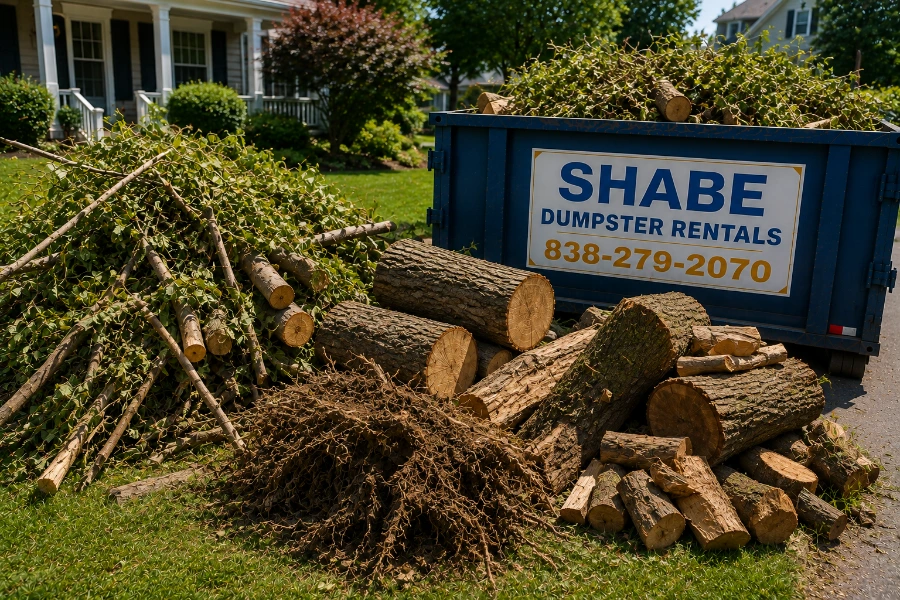
Branches and Limbs
Cutting a tree apart can produce a large amount of branches and limbs, especially when the canopy is extensive.
Brush
Small branches, twigs, leafy material, and other brush can quickly create bulky piles around the property.
Logs and Trunk Sections
Large wood sections are much denser than ordinary brush and should be considered separately when planning the disposal load.
Root Balls
Stump and root removal can produce bulky material with significant amounts of soil attached.
Cleanup Debris
Tree work may also leave sawdust, small wood fragments, vines, protective material, or other job-related debris.
For broader wood disposal information, see our Wood Disposal page.
Tree Debris Can Be Bulky, Heavy, and Irregular
Branches
Long branches can consume significant container volume if they are not organized efficiently for loading.
Brush
Brush is often light but extremely bulky, making available container space an important consideration.
Logs
Trunks and large limbs are much denser than brush and can affect weight limits quickly.
Root Balls
Roots carrying attached soil can become especially heavy and may need separate planning from ordinary branches.
Tell the provider whether the project includes logs or roots. A branch-and-brush cleanup has very different loading characteristics from a job that also includes trunks and large root balls.
How to Prepare for a Tree Removal Dumpster
Assess the Tree
Consider the tree’s size, canopy, trunk diameter, number of limbs, and surrounding property conditions.
Identify the Debris
Determine whether the project will produce branches, brush, logs, roots, stumps, or mixed landscaping debris.
Clear the Access Area
Move vehicles, outdoor furniture, equipment, and other items away from the tree and dumpster placement area.
Plan the Loading Route
Choose a practical path from the tree work area to the container while keeping workers and equipment moving safely.

How a Dumpster Fits Into a Tree Removal Project
Prepare the Work Zone
Remove vehicles, furniture, decorations, and other belongings from the area where branches and equipment will be moving.
Cut and Section the Tree
Tree professionals typically break the tree into manageable sections during the removal process.
Separate Large Wood
Keep logs, large limbs, branches, and smaller brush organized so the disposal load remains manageable.
Handle Roots Separately
Stumps and root balls may contain soil and require different planning from above-ground tree debris.
Load Efficiently
Place branches and brush into the dumpster in an organized manner while following service requirements and avoiding unsafe protrusions.
Finish the Property Cleanup
Once the tree is gone, collect smaller branches, wood fragments, leaves, and remaining approved debris from the work area.
Can Tree Removal Be Combined With Other Yard Projects?
Tree removal often happens alongside landscaping, stump removal, yard cleanup, deck work, shed removal, or other exterior improvements.
What Dumpster Size Is Right for Tree Removal?
The right container depends on the number and size of trees, canopy spread, amount of branches and brush, presence of logs or roots, and whether other yard debris is being removed.
Small Tree
A smaller tree with limited branches may create a manageable amount of woody debris after cutting and cleanup.
Mature Tree
A large canopy can produce a significant amount of branches and brush even when the trunk itself is removed separately.
Multiple Trees
Removing several trees at once can quickly increase the combined volume of branches, brush, and wood.
Tree + Roots + Yard Work
Adding stumps, roots, soil, landscaping debris, or hardscape material changes both the volume and weight profile.
Tree size alone does not determine dumpster needs. Canopy size, branch density, log sections, root balls, and additional yard debris can all affect the final load.
Review available containers on our Dumpster Sizes page.
Explore Related Tree, Yard, and Dumpster Rental Information
Tree removal can overlap with landscaping, yard waste cleanup, wood disposal, dirt removal, and broader outdoor property projects.
Helpful Pages for Tree Removal Projects
Tree Removal Dumpster Rental in Schenectady and Nearby Communities
Residential tree removal projects can involve individual tree removal, storm cleanup, overgrown property clearing, landscaping preparation, or removal of multiple trees throughout Schenectady and nearby communities.
Customers in Schenectady, Rotterdam, Niskayuna, Scotia, and Glenville may have different access considerations depending on tree location, driveway access, yard layout, fencing, equipment, and the amount of wood and brush being removed.
For broader local coverage, visit our Service Areas page.
Reuse or Recycle Wood From Tree Removal Where Practical
Not every piece of removed tree material necessarily needs to become waste. Depending on condition and local options, branches and wood may have uses such as chipping, mulching, firewood, or other forms of beneficial reuse.
Tree Removal Dumpster FAQs
What is a tree removal dumpster?
It is a dumpster used to collect approved debris generated during tree removal, such as branches, brush, smaller limbs, and other accepted wood material.
Can branches go in a tree removal dumpster?
Branches may be accepted depending on the service. Large limbs and woody material should be identified before loading because size and weight can affect the disposal arrangement.
Can logs go in a dumpster?
Logs may require specific handling because large pieces of wood can become very heavy. Confirm acceptance and loading requirements before placing them in the container.
Can tree stumps go in a dumpster?
Stumps may have special handling requirements depending on their size and the amount of soil attached. Confirm before disposal.
Can roots with soil go in the dumpster?
Root balls can be much heavier than ordinary branches because they contain soil. Discuss them specifically before loading.
Can leaves and brush be combined with tree debris?
They may be compatible depending on the service. Include leaves, brush, branches, and other yard debris when estimating the complete container load.
Can I combine tree removal with landscaping cleanup?
Potentially, when the materials are compatible and accepted. Landscaping may add soil, sod, gravel, concrete, or other debris that can change the disposal requirements.
What dumpster size do I need for tree removal?
It depends on the number and size of trees, canopy spread, amount of branches and brush, presence of logs or roots, and other debris. Review the Dumpster Sizes guide while accounting for the specific tree debris.
How much does tree removal dumpster rental cost?
There is no universal price. Dumpster size, rental period, location, disposal requirements, and the amount and type of tree debris can all affect the final cost.
How long should I rent a dumpster for tree removal?
The appropriate rental period depends on the number of trees, removal schedule, cleanup pace, weather, and whether additional landscaping work is happening at the same time.
Can the dumpster be placed near the tree?
Placement depends on delivery access, driveway conditions, tree location, property layout, and the safest route for moving debris from the work zone to the container.
Do I need a permit for a tree removal dumpster?
Requirements can depend on where the dumpster is placed. Private property and public right-of-way placement can have different requirements.
Should wood be separated from other yard debris?
Separating large wood from brush, leaves, soil, and unrelated materials can make handling and disposal more organized. Follow the specific service requirements for the project.
Need a Dumpster for Tree Removal in Schenectady?
Tell us how many trees are being removed, approximately how much branch and wood debris will be generated, whether roots or stumps are included, and where the project is located so the appropriate dumpster option can be discussed.
Call Now